In early December, Stockholm goes dark at three in the afternoon. By four, the streets are fully black, lit only by the amber of street lamps and the particular, thick glow of candles in windows. In Sweden, candles in windows are not merely decorative. They are a philosophical position. They are the Swedish answer to winter: if the darkness is total, make the light intentional.
I arrived in Stockholm on the first of December a few years ago without fully appreciating what I'd walked into. Within twenty-four hours I had drunk my first glögg, attended a workplace Lucia rehearsal by accident — I'd wandered into a government building looking for the toilet — and eaten something called lussekatt that I initially mistook for a dinner roll but turned out to be a saffron bun shaped like a small sleeping cat. By the end of the week, I understood why Swedes who move abroad frequently describe homesickness around this particular season.
Swedish Jul — Christmas — is not quite like Christmas anywhere else in Europe. The German influence is strong in the markets, the spices and the decorations. The Scandinavian bleakness of the season is real and acknowledged rather than suppressed. But overlaid on all of this is something specifically Swedish: a relationship with light, warmth and collective ritual that has been shaped by centuries of surviving very long, very dark winters in a country where the sun disappears for months at a time in the far north and sets before supper even in the south.
The result is a version of Christmas that prioritises atmosphere over spectacle, candlelight over floodlights, and the quality of warmth inside against the cold outside over elaborate decoration for its own sake. Coming from a culture where Christmas means more lights and more noise and more everything, there is something almost startling about how effectively the Swedish approach works.
The Advent Season: Four Weeks of Building Anticipation
Swedish Christmas begins in earnest on the first Sunday of Advent, four weeks before Christmas Eve. The calendar matters here in a way it doesn't in most places. Advent isn't just a vague run-up to Christmas; it has a defined structure, weekly markers and its own rituals that accumulate as December progresses.
Advent Traditions: Stars, Wreaths and the Julkalender
The advent star — a five- or seven-pointed paper star lantern — appears in windows on the first Sunday of Advent. Driven by a small electric bulb, it glows amber or white from hundreds of thousands of windows across the country. When you walk through a residential street in Stockholm or Gothenburg in early December and see these stars in every window of every apartment block, floor after floor, the effect is quietly extraordinary. No baubles, no Santa inflatables, no synchronised light displays. Just stars. Quiet, steady, identical.
The advent wreath — four candles, one lit each Sunday — sits on dining tables across the country. The first Sunday of Advent, the first candle. Second Sunday, two candles. By the fourth Sunday, all four are lit, and you are almost there. It is a progression, not a static decoration, and the accumulation has a particular psychological effect on the weeks leading up to the 24th.
Advent Markets: Stockholm, Gothenburg and Dalarna
The Christmas calendar — julkalendern — is a television institution that has run on Swedish state television almost continuously since 1960. It is a daily serialised drama, broadcast at 6:10pm every day from the first of December to the 24th, always aimed at children, always involving some form of winter magic or festive mystery, and watched by approximately everyone in Sweden regardless of age with varying degrees of irony. Families coordinate around it. Pub conversations reference it. It is one of the strangest and most endearing things about Swedish Christmas culture and you can watch it with Swedish subtitles if your Swedish runs to following a children's drama set in a snowbound village.
📅 Advent Markets: When and Where
Stockholm's Gamla Stan Christmas market opens in late November and runs through to just before Christmas Eve. It's one of the oldest in Sweden, set in the cobbled square of Stortorget, and operates in all weathers. Skansen open-air museum runs a larger market on weekends throughout December. In Gothenburg, Haga neighbourhood transforms its nineteenth-century wooden street into the most characterful of the city's several market options — try the five-centimetre-thick cinnamon rolls from the bakeries there. In Dalarna, the market at Leksand on Lake Siljan combines the most traditional Swedish Christmas atmosphere with a setting that feels genuinely old.
Lucia: The 13th of December
If you can only be in Sweden for one day of the advent season and you have any choice over which day, choose the 13th of December. Lucia Day is the most specifically Swedish of all the Christmas traditions, and the one that visitors most consistently describe as the most unexpectedly moving thing they have ever witnessed at a travel destination.
The History Behind Lucia Day
Saint Lucia was a Sicilian martyr from the fourth century, commemorated on the 13th of December in the old Julian calendar because her feast day fell on the winter solstice — the longest night of the year, the night when the light returns. In Sweden, she became, somewhere in the eighteenth or nineteenth century, something more particular: a young woman in a white robe with a crown of candles in her hair who comes through the darkness in the early morning to bring light to the household.
Every school in Sweden holds a Lucia ceremony on the morning of the 13th. Every workplace, every nursing home, many churches and many family homes follow a version of the same ritual: a procession of children or young people in white, led by the Lucia figure with her candle crown, moving through the dark in silence before beginning to sing. The songs are old — Lusse Lussen, the traditional Lucia song, has a melody that is somewhere between a lullaby and a hymn — and the effect of hearing a choir of white-robed children singing in the dark, each holding a candle, in a room that has been kept deliberately unlit, is not something any description fully prepares you for.
The largest public Lucia ceremony in Sweden takes place in Stockholm's Storkyrkan cathedral on the morning of the 13th. The Lucia chosen each year is traditionally elected by readers of a major newspaper; the role has been held by women, men and non-binary individuals over the past decade, a quiet indication of how the tradition evolves without losing its core. The ceremony is broadcast live on national television. It is attended by the Swedish royal family. And every year, without apparent irony or embarrassment, the country's most formal institutions treat it with the same seriousness as a state occasion, because in some meaningful sense it is one.
🕯️ Attending a Lucia Ceremony
Markets Beyond Stockholm
The Storkyrkan ceremony requires tickets, which are allocated by ballot and go quickly. Check the Swedish church website (svenska.kyrkan.se) in October for the application process. For a more intimate experience, many smaller Stockholm churches hold public Lucia services that don't require advance booking — arrive thirty minutes early and bring a candle if one is offered at the door. Outside Stockholm, Gothenburg's Domkyrkan and Uppsala Cathedral both hold significant Lucia ceremonies. School ceremonies are the most moving but generally not open to the public; if you know Swedish families with school-age children, an invitation to one of these is among the most generous gifts you can receive during the season.

The Food: What Swedish Christmas Actually Tastes Like
The Julbord: How It Works
The Swedish Christmas table — julbord — is its own category of thing. It is not a single meal but a table from which you eat in multiple rounds over an unhurried two or three hours, and it contains flavours that are very specifically rooted in the Nordic preservation traditions of a cold country that had to store food through long winters before refrigeration made the problem easier.
The central protein is the Christmas ham — julskinka — a large cured ham that is simmered for hours before being coated in a mustard and breadcrumb crust and briefly roasted to give it the golden, slightly crunchy exterior that marks it as the real thing. Every Swedish family has an opinion about the correct way to prepare this coating. The opinions are strong and frequently inherited. The ham is eaten cold, in thin slices, throughout the Christmas period.
Alongside the ham comes a table of things that may take some adjustment for visitors. Pickled herring in various preparations — with mustard, with cream and dill, with onion and vinegar, with beetroot and allspice. Swedish meatballs, smaller and more finely seasoned than anything sold outside Sweden. Janssons frestelse — Jansson's Temptation — a gratin of potato, cream, onion and the salty Swedish ansjovis (which are not anchovies in the Italian sense but a spiced, fermented sprat that is something altogether more pungent and more addictive). Prinskorv, the small cocktail sausages eaten with mustard. Rödbetssallad, the cold beetroot salad. And, at the end, rice pudding with a hidden almond — the person who finds it in their bowl is said to marry within the year, a tradition that produces either hope or mild social anxiety depending on the current state of your romantic life.
Glögg — the Swedish mulled wine — deserves a paragraph of its own. It is not the thin, sweetly spiced hot wine that passes for mulled wine at Christmas markets elsewhere in Europe. Swedish glögg is made with red wine, port or sometimes spirits as a base, heavily spiced with cardamom, cloves, cinnamon, ginger and bitter orange peel, and served very hot in small cups with blanched almonds and raisins dropped in at the point of serving. There is a non-alcoholic version made with juice that is entirely excellent. There is also a version based on aquavit that is entirely dangerous and served at the kinds of parties where the evening's trajectory cannot be predicted at the outset.
🫙 Taking Glögg Home
Systembolaget, Sweden's state alcohol retailer, sells bottled glögg from October onwards in a range that includes single-estate small-producer versions as well as the reliable household standards. Blossa is the brand most Swedes associate with childhood and family — they release a limited annual vintage with a new flavour each year, and the bottles are collected. Non-alcoholic glögg is sold in every supermarket and is excellent for gifts. Both travel well in checked luggage if properly wrapped, and the bottles make the most Swedish possible thing to bring home from December in Stockholm.

Christmas Eve: The 24th is the Day
In Sweden, Christmas is celebrated on the 24th of December, not the 25th. Christmas Eve — julafton — is when gifts are exchanged, when families gather, when the julbord is at its fullest, and when the Swedes watch the same thing they have watched on television on this day every year since 1960: Donald Duck and His Friends Wish You a Merry Christmas, a forty-five-minute compilation of Disney cartoons first broadcast in Sweden in 1959 and now so embedded in the national Christmas ritual that it draws roughly a third of the entire Swedish population to their televisions at 3pm every year.
This fact — that one of the most formally reserved, hygge-resistant, earnest Nordic nations religiously watches Donald Duck cartoons as the centrepiece of its most important family day of the year — is the most Swedish thing that exists. It resists explanation. It is simply true, and it has been true for sixty-five years, and there is something deeply low-key about a whole country collectively agreeing, generation after generation, that this is a good way to spend Christmas afternoon.
After the cartoons, gifts. In Swedish tradition, tomten — the Christmas gnome, an ancient figure from Scandinavian folklore long predating the modern Santa Claus — delivers the presents. In practice, tomten is usually a family member who briefly disappears from the room and reappears in a red outfit with a white beard. The presents are opened one at a time, with each one read aloud to the room. It is slow, deliberate, attentive — the opposite of the frenzied simultaneous unwrapping that other Christmas cultures sometimes practise, and it makes each gift an event rather than a contribution to a pile.
Christmas Markets: Where to Go and What to Look For
Stockholm: Gamla Stan and Skansen
Gamla Stan, Stockholm's medieval island old town, is the classic Swedish Christmas market experience. Stortorget — the main square — fills with stalls selling handmade decorations, wooden toys, reindeer skins, wool textiles and every conceivable variety of glögg and pastry from late November. The medieval buildings crowding the square, the cobblestones underfoot, and the candlelight from every window overhead create a setting that is genuinely beautiful in a way that doesn't require any particular suspension of cynicism.
Skansen, the open-air museum on Djurgården, runs its own julmarknad on weekends throughout December, with historical crafts demonstrations, live music, a working bakery producing the season's traditional breads and an atmosphere that is more about Swedish tradition and less about hot chocolate and selfies. It is the better choice if you have children, the stronger educational experience, and the one I'd recommend to anyone visiting Sweden specifically for the Christmas period.
Outside Stockholm, Gothenburg has developed several excellent markets across the city. The Liseberg amusement park transforms itself into what it calls the largest Christmas market in Scandinavia, with rides, ice skating, elaborate light installations and the kind of sensory overload that either delights or exhausts you depending on your disposition. More characterful is the Haga district, where the nineteenth-century wooden street fills with small independent shops and the bakeries compete to produce the most enormous cinnamon rolls available anywhere in the Northern Hemisphere.
Dalarna — the region around Lake Siljan in central Sweden — offers the most traditionally Swedish Christmas experience of any region in the country. The landscape in December is everything you hope for: birch forests under heavy snow, frozen lakes reflecting the low winter light, wooden red farmhouses with lit windows, and a Christmas market culture rooted in local crafts — particularly the Dalahäst, the painted wooden Dala horse that is the most recognisable symbol of Swedish folk art and manufactured in the villages of Nusnäs and Mora since the seventeenth century.
🎄 The Dala Horse: What It Means
The Dalahäst — Dala horse — is carved and painted by hand in a small number of workshops in the village of Nusnäs, near Mora. The traditional colours are red with blue, green and yellow folk-art decoration, but contemporary versions come in every palette. Visiting a working Dala horse workshop during the Christmas season — several are open to visitors — and watching the hand-painting process is one of the better artisan experiences available anywhere in Sweden. These are not souvenirs; they are genuine pieces of folk craft that have been made in essentially the same way for three hundred years.
Christmas in Swedish Lapland
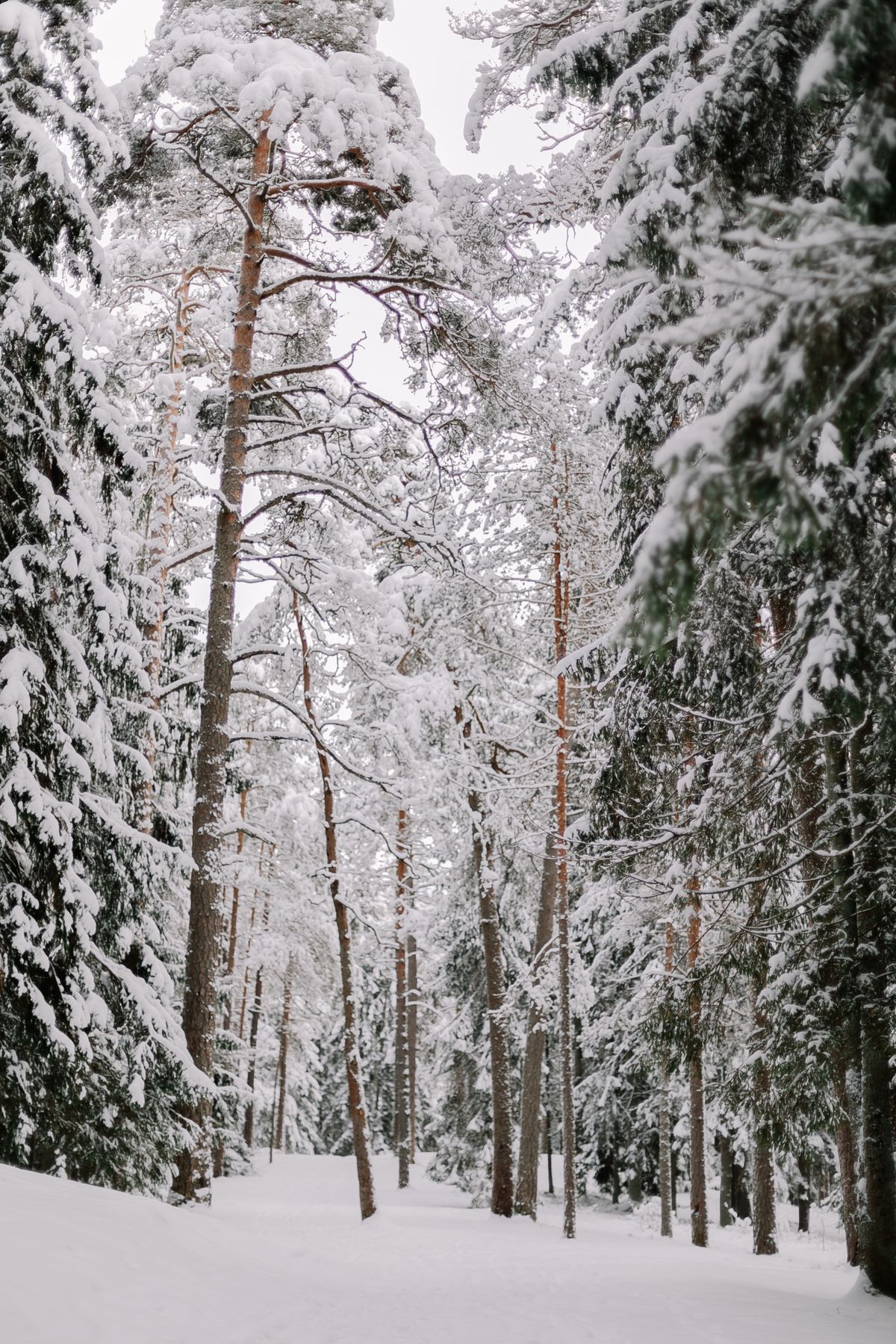
If the question is "what is the most Christmas a place can possibly be," the answer is Swedish Lapland in December. It is, in fact, almost unfairly Christmas. Reindeer walk beside the road. The snow is deep and very white. The sky, when it clears, is either the deep blue-black of an Arctic night or the extraordinary pale pink of Arctic twilight, which lasts for most of what passes for afternoon this far north. Temperature: minus twenty. Likelihood of encountering an actual working sled pulled by actual reindeer: very high.
Kiruna and Jukkasjärvi host the ICEHOTEL — an experience that is, in December, essentially a Christmas film set that you can sleep inside. The ice rooms carved for that season's designs are freshly completed, the walls pristine and blue-white, and the knowledge that the whole structure will melt in spring gives it a transience that feels appropriate to the season. Northern Lights viewing is possible from September onwards but December — with its near-total darkness — provides the longest possible window each night. On a clear evening, the aurora appears between four in the afternoon and nine in the morning.
The Sami culture of Lapland has its own relationship with the winter season that predates and exists alongside the Swedish Christmas traditions. Several tour operators in the Kiruna area offer experiences led by Sami guides — reindeer herding visits, traditional joik music performances, and storytelling about the winter as it has been understood in this landscape for thousands of years. These are worth seeking out not as a Christmas activity specifically but as a way of understanding that the darkness of a Lapland December has been given meaning, in multiple different cultural frameworks, for a very long time.
The Swedish Christmas Calendar: Week by Week
Late November: Advent markets open in most major cities. Advent decorations appear in windows. Systembolaget fills with glögg bottles. The television julkalendern begins its run.
First Sunday of Advent: Advent stars in windows, first candles lit. The season has a formal start. It is now acceptable to play Christmas music, though many Swedes would have started two weeks ago.
December 13th: Lucia Day. Ceremonies in schools, workplaces, churches and homes across the country. If you are in Sweden today, arrange to be near a church at around 8 or 9 in the morning. Something will be happening nearby.
Week of the 18th–23rd: The country begins to shut down for the holiday. Shops close early on the 23rd. Grocery queues on the 23rd — called Dopparedagen, the day for dipping bread in the Christmas ham stock — are a national institution and an exercise in Swedish collective patience.
December 24th: Julafton. Donald Duck at 3pm. The julbord, stretched over the afternoon and evening. Gifts exchanged one by one. A particular quality of quiet in the streets outside, as the country is essentially entirely indoors.
December 25th and 26th: Public holidays. The julbord continues to exist. Leftovers are the food of the season. Long walks in the dark before it gets too cold. The particular feeling of the days between Christmas and New Year, which in Sweden have a specific suspended quality — julledighet, the Christmas holiday — where normal time seems to have paused.
What Christmas in Sweden Does to You
I've been to Stockholm in December three times now. Each time I arrive, I'm slightly surprised by how dark it is — not just the hours but the quality of the darkness, which is heavier and more complete than English or German winter darkness in a way I can't fully explain. And each time, within about twenty-four hours, something adjusts. The candles in the windows stop being decorative objects and start functioning the way they're meant to: as points of warm light in cold dark, as evidence of habitation and warmth, as the most basic possible reassurance that someone is inside and the fire is lit.
Swedish Christmas teaches you, or at least it taught me, that winter darkness isn't a problem to be solved with more electricity. It's a condition that has its own aesthetic, its own pleasures, and its own particular beauty — the beauty of contrast, of warm against cold, of lit against dark, of the spiced heat of a glögg cup against fingers that were very recently frozen. The Swedes have had several thousand years to develop a cultural response to their winter, and the response they've arrived at is — with the advent stars and the Lucia processions and the candlelit julbord and all the accumulated ritual of December — very good indeed.
Swedish Christmas: Key Dates and What Happens
| Date/Period | Event | What To Do |
|---|---|---|
| 1st Sunday of Advent | Advent begins | Christmas markets open; first glögg |
| 13 December | Lucia | Lucia service at local church (morning) |
| Advent weekends | Christmas markets | Skansen (Stockholm), Liseberg (Gothenburg) |
| 23 December | Little Christmas Eve | Families prepare julbord |
| 24 December, 3pm | Kalle Anka (Donald Duck TV) | Watch SVT1 with Swedish family or in a café |
| 24 December, evening | Jultomten (Father Christmas) | Gifts delivered in person by costumed visitor |
| 25–26 December | Juldagen / Annandag jul | Public holidays; quiet; some restaurants open |
Mistakes Tourists Make at Swedish Christmas
❌ Arriving after Lucia and before Christmas Eve
The Swedish Christmas calendar front-loads its best experiences. Lucia (13 December) is one of the most beautiful Swedish traditions and the Advent market weekends in late November and early December have the best atmosphere. Arriving on 22 December and leaving on 26 December means missing Lucia entirely and catching Christmas Eve (which is a family event — restaurants are closed, the city is quiet, and hotels charge peak rates for what is effectively a closed-shop evening). Arrive before Lucia or stay through New Year.
❌ Not getting glögg from Systembolaget
Glögg from a restaurant costs 80–120 kr a cup. The same quality glögg from Systembolaget in a 75cl carton costs 60–90 kr for multiple cups. Blossa and Festis make the best ready-made versions. Heat it with cardamom, cloves and a strip of orange peel on the hob, add raisins and blanched almonds, serve in a heat-proof cup. Swedes drink glögg at home, outside in the cold, and at markets from cardboard cups. It is not primarily a restaurant drink.
❌ Booking Lapland for Christmas without lead time
The ICEHOTEL, dog sledding operators and the better accommodation in Kiruna and Jukkasjärvi for the Christmas period fill up by late September. December is peak Lapland season. Visitors who start searching in October for Christmas week find only the expensive overflow options or nothing at all. Book Lapland Christmas by August at the latest. The packages that include flights, accommodation, dog sledding and aurora safari sell as complete units and go first.
Frequently Asked Questions: Christmas in Sweden
What is Swedish Christmas Eve like?
Christmas Eve (julafton, 24 December) is the main event — not Christmas Day. Swedish families gather for the julbord (Christmas table): a large spread of herring, gravlax, meatballs, Jansson's temptation, ribs and rice pudding. After lunch, Donald Duck's Christmas special plays on national television at 3pm — a tradition so established that restaurants and shops close for it. Father Christmas (jultomten) visits in the evening to deliver gifts personally.
What is Lucia and when does it happen?
Lucia is 13 December — a festival of light in the darkest part of winter. A procession of singers wearing white robes and carrying candles moves through churches, schools and workplaces singing traditional songs, led by a girl wearing a crown of candles (St Lucia). It is one of the most beautiful Swedish traditions and genuinely moving to witness. Most churches in Sweden hold public Lucia services on the morning of 13 December; Storkyrkan in Stockholm and the Gothenburg Cathedral hold the most atmospheric.
What are the best Christmas markets in Sweden?
Skansen Open Air Museum in Stockholm has the most traditional and atmospheric market, running weekends throughout Advent. Gamla Stan (the Old Town) in Stockholm has a compact market in Stortorget that is very worth seeing but very busy. Gothenburg's Liseberg Christmas market is the largest in Sweden. Julmarknaden i Gamla Linköping and the markets in Sigtuna offer a more genuinely historical setting. For the most dramatic setting, the ICEHOTEL market in Jukkasjärvi, Lapland, is unlike anything else.
What is glögg?
Glögg is Swedish mulled wine — red wine (or sometimes white, or alcohol-free) heated with spices: cardamom, cloves, cinnamon, dried orange peel and ginger. It is served hot, typically with a spoonful of raisins and blanched almonds dropped in. Every Swedish household has its own recipe and opinions about whose glögg is best. It is available ready-made in cartons from Systembolaget from November. The alcohol-free version (lätt glögg) is just as good and available in supermarkets.
Is Swedish Lapland worth visiting at Christmas?
Yes, if you book early and budget properly. A Christmas week in Kiruna or Jukkasjärvi — with dog sledding, reindeer experiences, the ICEHOTEL and the possibility of aurora — is genuinely extraordinary. Flights from Stockholm to Kiruna book out fast for December; the ICEHOTEL fills completely by October. Budget around 15,000–25,000 kr per couple for a week including accommodation, activities and flights. It's expensive, but it is an experience with no equivalent anywhere else.