July in Barcelona is 36°C. In Rome it's 34°C. Athens hits 40°C and stays there for weeks. Southern France, Croatia, Portugal — the entire Mediterranean basin has become, for a significant chunk of summer, genuinely too hot to enjoy. You wake up sweating, lunch is survival, you spend the afternoon indoors waiting for a sea breeze that arrives at 8pm and leaves by 10. The wine costs €18 and the terrace is unbearable by noon.
The north doesn't have this problem. In Sweden's lake district in July, it's 21°C. The days are 20 hours long. You can sit outside at 9pm in a T-shirt without a wine glass burning your hand. The swimming is cold and excellent. The forests are the particular shade of green that only happens when a landscape gets actual rainfall. There are no queues for anything.
This is not a new observation. What's changed is the scale of the problem in the south, and the growing number of people who've started asking: what's actually up there? Specifically, which of the northern European countries makes the most sense — Sweden, Norway, Iceland, Finland — and what's the honest case for each?
This guide covers all four. But the conclusion, stated clearly at the start so you can interrogate it: for most travellers, most summers, Sweden is the best answer. Not because the others are bad. Because Sweden is more complete, more accessible and — with very few exceptions — more rewarding per day of travel.
Why the North Works as a Summer Destination
There is a persistent misconception that the Nordic countries are cold in summer — that "escape the heat" means trading one discomfort for another. It doesn't. Sweden's average July temperature in Stockholm is 22°C. Gothenburg runs a degree or two lower. The south of the country — Skåne — is consistently the warmest part, often reaching 25°C. None of this is cold. It is, by objective measure, ideal outdoor weather: warm enough to swim, cool enough to walk without stopping every fifteen minutes.
Norway's west coast is cooler and wetter — Bergen averages 19°C in July but receives a significant amount of rain. Northern Norway is dramatic but colder, around 15–18°C in the northern fjords. Finland runs similar to Sweden. Iceland is the genuinely cool option, sitting at 11–14°C in Reykjavik through summer — fine for outdoor activity, not quite T-shirt weather.
The other factor is daylight. In Stockholm in June and July, the sun sets around 10pm and rises at 3:30am — there are essentially no dark hours. This changes the experience of a day in a fundamental way. Evenings that would be over at 7pm in Barcelona continue outdoors until midnight. The psychological effect is real: you feel like you have more time, because you do.
Iceland: The Dramatic Option
Iceland
Iceland is genuinely extraordinary and genuinely expensive. The landscape — volcanoes, geysers, glaciers, waterfalls, lava fields — is unlike anything else in Europe, and for certain travellers, that uniqueness is the whole point. If you've never seen a geyser erupt from 10 metres away, or walked on a glacier, or driven over a mountain pass into a valley that looks like a film set, Iceland delivers all of that. Once.
The problems are structural. The Blue Lagoon, which costs €80–120 per person for entry, must be booked months in advance in summer. The Golden Circle — the route covering Þingvellir, Geysir and Gullfoss — processes thousands of coaches per day in July. The Ring Road is excellent but requires either a rental car (expensive) or joining a bus tour (also expensive, and you're watching the landscape through a window). A week in Iceland done properly — not just Reykjavik — costs around €1,500–2,000 per person including internal travel and accommodation. That's before flights.
The temperature question is also worth being honest about. At 11–14°C with an Atlantic wind, Iceland in summer is not particularly outdoor-friendly in the conventional sense. You can absolutely hike and swim and drive around — but you need a proper jacket for most activities, the wind has opinions, and the weather can change from clear to horizontal rain in twenty minutes. For travellers specifically looking to swap Mediterranean heat for comfortable outdoor warmth, Iceland is arguably undershooting.
Iceland's case is strongest for travellers who have already done the obvious northern European destinations and want something genuinely different. As a first northern Europe summer trip? There are better entries.
Norway: The Fjords and What They Cost
Norway
Norway has the best scenery in northern Europe by a significant margin. This is not a controversial position — the western fjords, the Lofoten Islands, the Trolltunga and Preikestolen hikes, the Flåm railway through mountain scenery that seems designed by someone who wanted to make a point about what landscapes can do — all of it is genuinely extraordinary. Hardangerfjord alone is worth a significant detour.
The problem is that seeing all of it requires either considerable money or considerable time, and usually both. Getting from Bergen to Lofoten requires either an expensive internal flight or a two-day journey by train, bus and ferry. Accommodation in the fjord villages costs 1,800–2,800 NOK per night for a decent room. A meal in Bergen — a city that feels mid-range by Norwegian standards — costs 250–380 NOK for a main course. Petrol is expensive. Ferries are expensive. The Fjordpass and various attraction tickets add up in a way that is hard to budget for until you're in it.
Bergen itself gets significant rainfall — roughly 240 days of rain per year, with July being one of the drier months but still averaging 16 days of precipitation. The fjord valleys can be dramatic but also feel enclosed, especially if the clouds sit low. Oslo is warmer and drier and more manageable, but Oslo is primarily a city holiday rather than a nature escape.
Norway makes the most sense for travellers with a specific interest in dramatic Nordic scenery and a budget to match. For a week of comfortable outdoor summer travel without financial stress, it is the most expensive of the four options by a meaningful margin. If the fjords are a must-see, Norway; if the goal is the best overall northern European summer experience per pound or euro spent, Norway is third on this list.
Finland: The Closest Comparison to Sweden
Finland
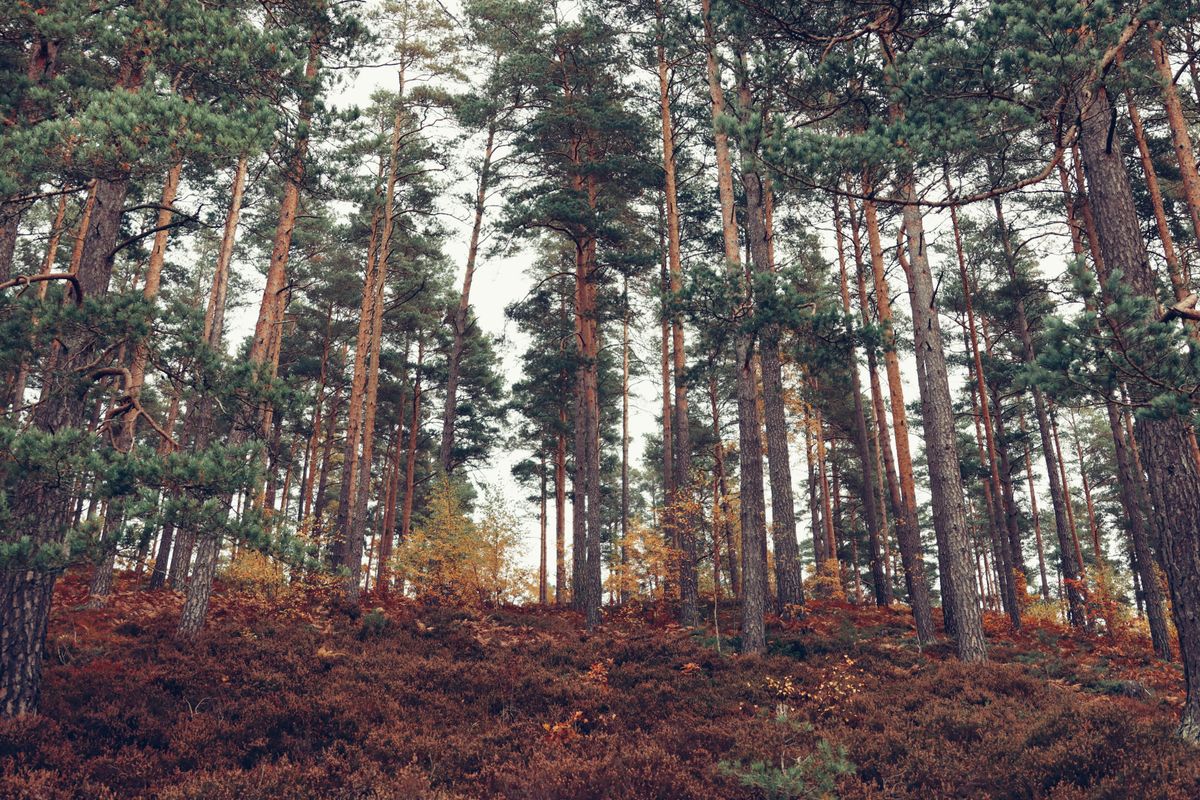
Finland is the country on this list that gets the least credit. It's not as instantly dramatic as Norway, not as famous as Iceland, and it's frequently overlooked in favour of Sweden simply because Sweden has more international profile. This is somewhat unjust. The Finnish lake district — roughly 188,000 lakes across the Savo and Karelia regions — is one of the great waterscape experiences in Europe. Canoeing through the Saimaa lake system, staying in a cottage with a wood-fired sauna on the shore, swimming at midnight in water that's 22°C in late July — this is a legitimately excellent summer experience.
The sauna culture is more deeply embedded in Finland than anywhere else on earth. The country has around 3 million saunas for 5.5 million people. Where Swedish sauna culture is something you encounter and participate in, Finnish sauna culture is something you inhabit — it is woven into daily life, social ritual and the national character in a way that's genuinely distinct. For anyone specifically interested in sauna as a reason to travel north, Finland has the edge over Sweden.
Helsinki is a good city — compact, well-designed, with an excellent market hall and a food scene that has improved significantly over the last decade. But it doesn't have the variety of Stockholm. Tampere and Turku are regional cities with their own character but limited visitor infrastructure. Getting around Finland outside Helsinki without a car is possible but requires planning. And the Finnish landscape — forest and lake, forest and lake, flat horizon in almost every direction — is beautiful but monotonous for travellers who want visual variety alongside their nature immersion.
The practical comparison with Sweden: Finland is roughly the same cost, slightly cheaper in some areas. The countryside experience is comparable. The city experience is clearly better in Sweden (Stockholm vs Helsinki is not an equal contest for a city break). The food culture has historically lagged — Finnish cuisine at its traditional core is functional and hearty rather than interesting, though urban Finnish restaurants have closed this gap considerably in recent years. The language is significantly harder — Finnish is one of the most complex languages in Europe, and while English is spoken well in cities, rural signage and menus are harder to navigate than in Sweden. The overall verdict: Finland is an excellent choice, particularly for the lake district and sauna culture, but loses to Sweden on diversity, food, urban experience and navigability for first-time visitors.
Sweden: The Full Case
Sweden
The argument for Sweden isn't that it beats Norway on scenery (it doesn't, in the dramatic fjord sense) or Finland on sauna culture (close, but Finland wins) or Iceland on geological spectacle (Iceland by a distance). The argument is that Sweden wins across the full range of what makes a summer trip work — the combination of temperature, cost, variety, food, transport, language access and the sheer number of things you can do without a specialist itinerary.
Start with the geography. Sweden stretches from the latitude of Edinburgh in the south to well above the Arctic Circle in the north — roughly 1,500 kilometres of terrain that changes character dramatically as you move through it. The south (Skåne, Blekinge) is agricultural, warm, food-obsessed, with a wine culture borrowed from nearby Denmark and a Mediterranean-adjacent sensibility that reads as almost southern European. The west coast (Bohuslän) is granite and sea and freshly boiled prawns eaten on wooden docks. The central lake districts (Värmland, Dalarna) are the classic Swedish summer-cottage experience — canoe routes, swimming lakes, village bakeries. Stockholm and its 27,000-island archipelago provides a capital city holiday that seamlessly connects to genuine wilderness by public ferry. The north adds midnight sun, reindeer, and the particular quality of sub-Arctic summer light.
No other northern European country offers this range within its own borders. Norway's comparable variety requires much more expensive internal travel. Finland's geography, while beautiful, is more uniform. Iceland's territory is small and the itinerary is essentially one long loop.
Sweden vs Norway: The Specific Comparison
Norway's primary advantage over Sweden is one thing: the fjords. Hardangerfjord, Sognefjord, Geirangerfjord — these are genuinely among the great landscapes in Europe, and if you have never seen a deep-water fjord with cliff walls rising 1,400 metres above you, photographs do not prepare you for the experience. This is real and it matters.
Sweden doesn't have fjords. What Sweden has instead is: the Bohuslän coast (granite archipelago, sailing culture, some of the best seafood in Europe), the Stockholm archipelago (27,000 islands, accessible by public ferry for 25 SEK), the lake districts (clear, swimmable water, cycle routes, cottages, silence), Gotland (Baltic island with medieval city walls and limestone rock formations), and a national right-to-roam law — Allemansrätten — that means you can camp anywhere, swim anywhere, and forage anywhere without permission or payment.
On cost: a comparable week in Norway runs roughly 35–40% more than the same week in Sweden. The specific items that drive this are accommodation (Norwegian coastal hotels and guesthouses are significantly pricier), food (restaurant meals in Bergen and the fjord villages cost 30–50% more than equivalent meals in Swedish cities), internal transport (fjord ferries, mountain railways, express boats), and car rental with fuel. A week in Sweden that costs a couple €1,200 would cost €1,600–1,700 in Norway for a similar itinerary.
On weather: Norway's west coast is beautiful but wet. Bergen receives more annual rainfall than almost any city in Europe. July is better than the rest of the year but is not reliably dry. The fjord valleys are magnificent when the weather holds and claustrophobic when clouds sit at 200 metres. Sweden's summer weather is more settled — Stockholm has around 8 days of rain in July, and the eastern coast and archipelago benefit from drier continental weather patterns than Norway's Atlantic-facing west.
The practical conclusion: if you're planning a first trip to northern Europe in summer and have one to two weeks, Sweden gives you a better return on that investment. If you've done Sweden and want the single most dramatic landscape on the continent, Norway is the next destination.
Sweden vs Iceland: Why the Cost Gap Matters
Iceland is the destination that has dominated cool-climate European travel conversations for the past decade, largely on the strength of its Instagram presence and the undeniable power of its landscape. The case for it is real. The case against it, in the context of a summer heat escape, is also real.
First, temperature. Iceland at 11–14°C is not an alternative to Mediterranean heat in the way Sweden at 20–22°C is. You will not be sitting in a café terrace in a T-shirt in Reykjavik in July feeling the particular relief of cool northern air. You will be wearing a fleece most of the time. The outdoor experiences — hiking, whale watching, geothermal swimming — are excellent, but they require dressing for them. The baseline sensory experience of being warm in nice weather without effort does not really exist in Iceland in the same way it does in Sweden.
Second, cost. Iceland is among the five most expensive countries in Europe for visitors. A reasonable hotel night in Reykjavik costs €130–200. A meal costs €25–40 per person for something mid-range. Rental cars — essentially required for anything beyond Reykjavik — cost €80–150 per day depending on the vehicle type and road access required. A week in Iceland done without cutting corners costs a European traveller €1,400–2,000 per person including flights. A comparable week in Sweden costs €800–1,100.
Third, the crowd problem. The sites that made Iceland's reputation — the Blue Lagoon, the Golden Circle, Seljalandsfoss — are genuinely popular in a way that affects the experience. The Blue Lagoon must be booked months ahead and even then you're sharing milky geothermal water with several hundred strangers. The Golden Circle passes 40-seat coach buses continuously. The famous overnight jökulsárlón glacier lagoon boat tour fills every day in summer. Sweden's equivalents — the archipelago, Gotland, the west coast — get summer visitors but nothing on this scale. You do not need to book the Stockholm archipelago four months in advance.
Iceland's advantages are genuine and significant for the traveller who specifically wants volcanic landscape, glaciers and geothermal experience. For the traveller who wants a cool, comfortable, affordable summer in northern Europe with a wide range of things to do, Sweden is better value and better weather.
Sweden vs Finland: The Closer Contest
The Sweden-Finland comparison is the most genuinely close of the four. Both countries offer similar temperatures, similar nature experiences, similar cost structures. Both have excellent sauna culture, lake swimming, forests, archipelagos, and the long summer days of high latitude. The differences are at the margin but they consistently point in the same direction.
Stockholm is a significantly better city than Helsinki for a city break. It's larger, more architecturally varied, has a stronger restaurant scene, a better archipelago on its doorstep, and more cultural infrastructure (museums, galleries, events). This matters because most northern European summer trips involve at least a couple of days in the main city before heading into the countryside.
The Swedish countryside — specifically the Bohuslän coast and the Dalarna/Värmland lake region — is more varied than the Finnish equivalent. Swedish coastal character is different from Swedish lake character, which is different from Swedish forest character. Finland is predominantly lakes and forest, which is wonderful but homogeneous. If you're spending a week, Sweden gives you more scenes.
Food is genuinely better and more interesting in Sweden. The Skåne food scene rivals Denmark's; the west coast seafood culture is legitimate; Stockholm has restaurants with actual international reputation. Finnish food culture has improved substantially in urban settings but traditionally has less ambition and less variety.
The cases where Finland beats Sweden: if you specifically want the deepest possible sauna culture, Finland wins. If you want the Saimaa lake system — a specific and genuinely beautiful multi-day canoe experience — Sweden doesn't have a direct equivalent. If you've already done Sweden and want to continue exploring the region, Finland is the natural next destination.
When to Go and How to Plan
June is quieter than July and daylight is near-maximum in southern Sweden by Midsommar (late June). Midsommar itself — the summer solstice celebration — is worth timing a visit around if you can, particularly if you're anywhere in Dalarna, where the celebrations are most traditional. The weather in June can be variable; July is more consistently warm and settled.
Late July and August before schools return is the peak season — busier, slightly more expensive for accommodation, but also the warmest water temperatures for swimming (19–22°C in southern lakes, 16–19°C in the archipelago). The crayfish season opens in August on the west coast, which is a specific reason to time a Bohuslän trip for late summer.
September is the underrated month. Temperatures drop to 14–18°C in the south, the mushroom season begins (particularly in Värmland and Dalarna), the forests turn and the light goes golden. Accommodation is cheaper, crowds are thinner. If you can travel outside school holiday constraints, September in Sweden is arguably better than August.
Getting to Sweden: The Practical Routes
Direct flights to Stockholm Arlanda from London run approximately 2 hours and cost €60–200 return depending on season and advance booking (SAS, Ryanair, British Airways). Gothenburg has direct connections from several UK airports. From mainland Europe: Stockholm is reachable by train from Copenhagen (5 hours) and Hamburg (10 hours) — the overnight train from Hamburg is worth considering for the experience and the convenience of arriving rested. Within Sweden, the X2000 high-speed train connects Stockholm to Gothenburg in 3 hours from 299 SEK; Malmö in 4.5 hours. The rail network covers the country comprehensively.
Common Mistakes When Choosing a Northern European Destination
The most common mistake is optimising for scenery at the expense of everything else. Norway's fjords photograph better than anything Sweden offers. Iceland's volcanoes are more dramatic than Swedish forests. But a two-week holiday is not a photo archive — it's a sequence of days lived at ground level, which includes the cost of lunch, the ease of getting between places, the quality of a rest day in a café, the warmth of evenings outside. Sweden wins at ground level.
The second mistake is assuming Iceland is affordable because flights from the UK are cheap. Flights are cheap. Everything after the flight is expensive. Work out the full cost of a week including accommodation, a rental car, meals and activities before comparing it to the same week in Sweden. The gap is usually €500–700 per person.
The third mistake is treating northern Europe as a single experience. Sweden, Norway, Finland and Iceland are genuinely different countries with different characters, different strengths and different costs. A week in Bergen is not a substitute for a week in Stockholm, and neither is a substitute for a week on Gotland. The comparison here is about which country to choose for a first northern European summer trip — not which one is definitively best, because that question doesn't have a general answer.
The Practical Upshot
If you've never been to northern Europe in summer and are looking for two weeks that combine a city, coast, nature and the specific experience of long Nordic days at comfortable temperatures, Sweden is the place. Fly into Stockholm, spend two or three days in the city and the archipelago, take the train to Gothenburg, drive north along the Bohuslän coast, return via the lake district. You'll cover more character in that route than most visitors get in twice the time in any of the other three countries.
If you've done Sweden and want the landscape turned up to maximum, go to Norway. If you want the sauna experience taken seriously, go to Finland. If you want the most dramatic geological scenery in Europe and have the budget for it, go to Iceland. But for the first visit — Sweden, without a lot of doubt.
The Mediterranean will still be hot next year. And the year after. The north has time.