Swedes will tell you that Gothenburg is the better city. Stockholmers disagree, of course, but the argument is genuinely competitive. Gothenburg — Göteborg in Swedish, the second-largest city in the country — sits on the west coast at the mouth of the Göta älv river, with the North Sea weather rolling in from the west and the Bohuslän archipelago stretching north along the coast. It is more compact than Stockholm, considerably more relaxed, and by most measures has a better food and café scene per capita than anywhere else in Sweden.
For the Coldcation visitor, Gothenburg makes particular sense. The city sits squarely above the 45th parallel, temperatures in summer peak at a civilised 20–23°C, the seafood is pulled from the same clean cold water you can swim in, and the Bohuslän granite coast — one of the most beautiful stretches of Swedish shoreline — begins within thirty minutes of the city centre. This guide covers everything you need to know.
The Neighbourhoods
Haga: The Historic Quarter
Haga is Gothenburg's most famous neighbourhood and its most visited, for good reason. The nineteenth-century wooden houses — painted in deep reds, yellows and greens — line a single cobblestone main street (Haga Nygata) that is dense with independent cafés, bakeries, second-hand shops and the kind of small restaurants that locals eat at on weekday lunches. It's compact enough to walk in twenty minutes but rewarding enough to spend half a day. The cinnamon buns at Haga's bakeries are famously large — the size of a side plate — and the queues for them on a weekend morning tell you everything you need to know about their quality.
Linnégatan and Linné
Running south from Haga, Linnégatan is arguably Gothenburg's most interesting street — less tourist-oriented than Haga, more genuinely local, with excellent independent restaurants, wine bars and coffee shops that fill with residents on weekday evenings. The surrounding Linné neighbourhood is where young professionals and creative industries have settled, and the area has the density of good places to eat and drink that Stockholm's equivalent districts aspire to.
Avenyn and the City Centre
Kungsportsavenyn — universally known as Avenyn — is the main boulevard, running from the central station down to the Götaplatsen square with its famous Poseidon fountain. It's lined with restaurants, bars and shops and bustles on summer evenings. The Art Museum (Göteborgs konstmuseum) at the top end of Avenyn is one of the finest in Scandinavia, with a strong Scandinavian masters collection. The Gothenburg Opera sits by the river and can be visited for an evening performance or a guided tour.
Majorna and Stigberget
West of Haga, Majorna is a working-class neighbourhood that has gentrified thoughtfully — independent coffee shops and natural wine bars sitting alongside hardware stores and old-school lunch restaurants. Karl Johansgatan is the main street. Stigberget rises above it with views over the river and docks. These are the residential areas that Gothenburg residents actually live in, and the food scene here is increasingly interesting.
What to Do in Gothenburg
Göteborgs Konstmuseum
The Gothenburg Museum of Art at Götaplatsen is one of the best art museums in Scandinavia and consistently underrated by international visitors who head straight to Stockholm's museums instead. The collection of Nordic masters — Anders Zorn, Carl Larsson, Bruno Liljefors — is exceptional, and the Futurum gallery of contemporary art is consistently well-curated. Admission is reasonable and the museum is rarely crowded. Plan two hours.
The Canals
Gothenburg is traversed by a network of canals — vallgraven — that can be toured by boat (Paddan boat tours run from April to October) or simply walked alongside. The canal tour takes forty-five minutes, passes under low bridges and through the old merchant quarters, and gives a perspective on the city's geography that is genuinely helpful for orientation. The boats run frequently and tickets are available at the waterfront. The canal banks are also excellent for waterside walking and cycling.
Liseberg Amusement Park
Liseberg is Scandinavia's most visited amusement park and has been since 1923. It operates from late April through October and in December for Christmas. What distinguishes it from similar parks elsewhere is the setting — the park is landscaped, full of flowers in summer, beautifully lit at night — and the fact that it draws genuine mixed crowds: families, young adults, older couples out for the evening. The wooden roller coaster (Balder) has won awards. The park is entirely manageable for half a day and genuinely enjoyable even for non-amusement-park people. Evenings are the best time.
The Fish Market and Seafood
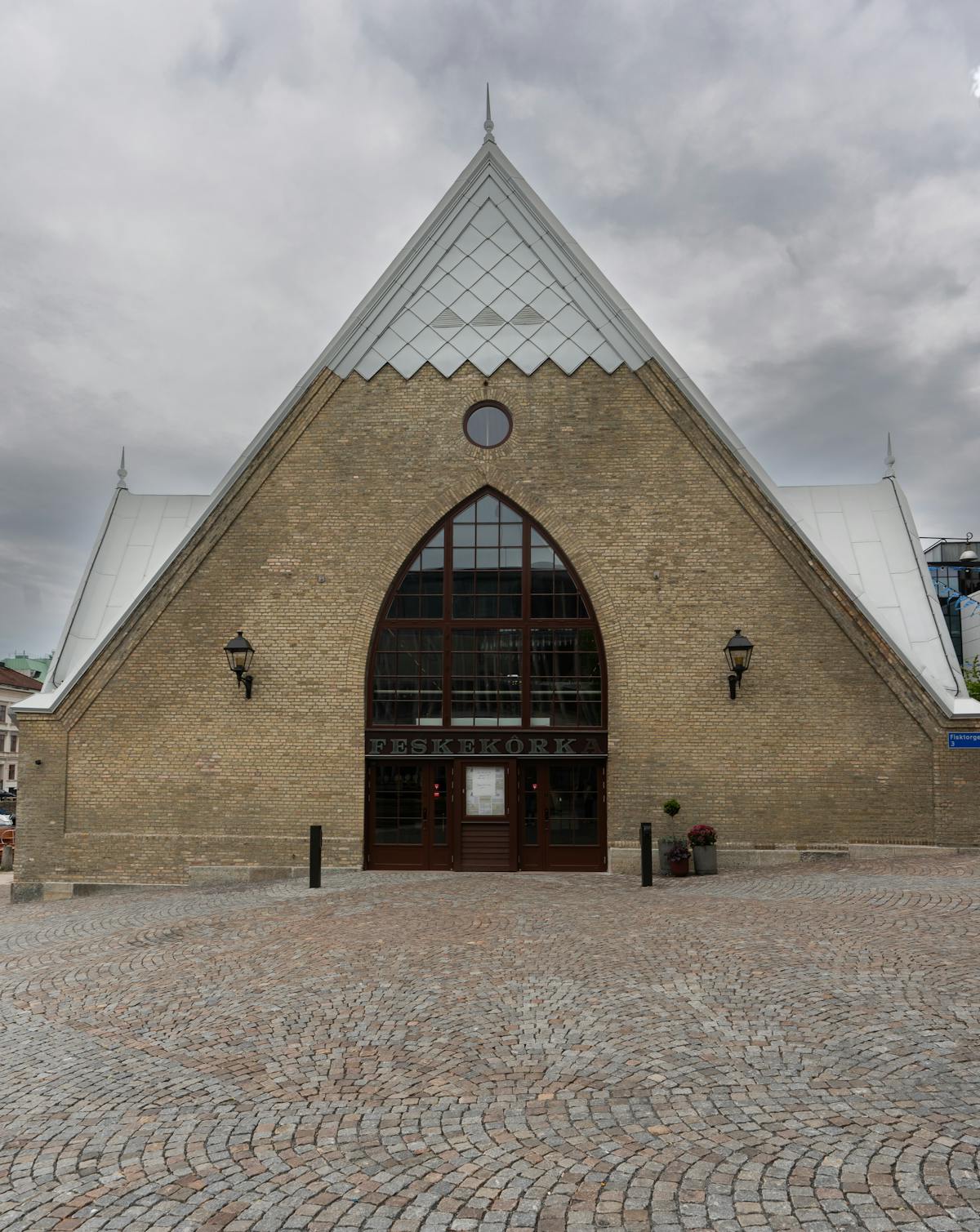
Gothenburg's fish market — Feskekörka, literally the Fish Church, named for the Gothic Revival building's resemblance to a cathedral — is a working fish market in a nineteenth-century hall by the canal. The quality of the seafood is exceptional: the Bohuslän coast immediately north of the city produces some of the finest prawns, langoustines, oysters and lobster in Europe, pulled from cold, clean North Sea water. You can buy raw fish to cook yourself or eat at the restaurant inside the market. Either way, eating seafood in Gothenburg is a fundamental part of the visit.
Slottsskogen Park
Gothenburg's main park, immediately west of Haga, is a large and varied green space with a free zoo (native Scandinavian animals — moose, elk, seals, Nordic birds), open lawns, a small lake, and several café pavilions. In summer it's where Gothenburg comes to picnic, play outdoor sports and let children run around. Free entry. The moose enclosure is genuinely good and the animals are well-habituated to visitors.
The Volvo Museum
Located on Hisingen island, a short tram ride from the centre, the Volvo Museum covers 100 years of Swedish automotive and marine engineering. For anyone with an interest in design or industrial history it's excellent — the early Volvo cars, the racing history, the marine diesel engines. Free parking. The museum café is good. Worth a half day for those interested in the subject; otherwise skippable.
Where to Eat in Gothenburg
Seafood
The seafood case for Gothenburg is strong. The traditional option is to buy a paper bag of prawns at the fish market, find a bench by the canal, and eat them with bread and butter and a cold beer. This is what locals do and it costs a fraction of a restaurant visit. For a sit-down seafood experience, Sjömagasinet (housed in a restored dock warehouse) is the classic high-end choice. For something more casual, the restaurants along the southern canal on Kungsportsavenyn have decent räkor (prawn) options.
Haga Bakeries
The bakeries on Haga Nygata serve the largest cinnamon buns in Sweden. This is not metaphor. The buns are 15–20cm across, soft, fragrant with cinnamon and cardamom and still warm when they come out of the oven. There are several bakeries competing for the same customers and all of them are good. Queue for whichever has the shortest line. Eat outside on the cobblestones.
The Reinvented Nordic Kitchen
Gothenburg's restaurant scene punches well above its weight. Bhoga has a Michelin star and serves a tasting menu rooted in the west coast's produce. Koka is a Michelin-starred neighbourhood restaurant in Vasastan that has been consistently excellent for years. For something less formal, Smaka on Vasaplatsen has been doing traditional Swedish husmanskost in a cosy basement setting since 1991 and has the feel of a restaurant that has earned its reputation honestly.
Day Trips: The Bohuslän Coast
Gothenburg's greatest asset as a base is the Bohuslän coast immediately to the north — the same granite archipelago landscape covered in our full Bohuslän guide. The coast begins within thirty minutes of the city centre.
Marstrand
The most popular day trip from Gothenburg, and deservedly so. Marstrand is an island fortress town forty-five minutes north by road and then a short ferry crossing. The seventeenth-century Carlsten fortress dominates the island from above. Below it, a small town of painted wooden buildings lines a harbour full of sailing boats. No cars on the island — everything is on foot. Excellent seafood restaurants. The views from the fortress battlements over the outer archipelago are exceptional on a clear day.
Smögen
Further north — two hours from Gothenburg — Smögen is the quintessential Bohuslän fishing village, with the longest wooden pier in Sweden (Smögenbryggan) lined with red fishermen's huts and seafood restaurants. It's busy in July but the pier at dawn or dusk, before the day trippers arrive or after they leave, is one of the best places in Sweden. Famous for its lobster — the western fjords produce lobster of extraordinary quality in season.
Southern Archipelago Islands
Styrsö, Donsö and Vrångö are islands in the southern Gothenburg archipelago, accessible by the city's public boat network. Unlike the Bohuslän destinations, these require no car — you can take the ferry direct from central Gothenburg (Saltholmen terminal). Quiet, beautiful, granite-and-heather landscapes. Good for a half day of swimming and wandering.
Getting to Gothenburg
By Train from Stockholm
The high-speed train from Stockholm Central to Gothenburg Central (Göteborg C) takes just under three hours on the fastest services. SJ operates frequent departures throughout the day. Book ahead for the best prices. This is comfortably the easiest and most pleasant way to travel between the two cities — no airport, no security, city-centre to city-centre.
By Air
Gothenburg Landvetter Airport (GOT) is the main airport, 25 minutes from the city centre by Flygbussarna coach. Several European carriers serve it, including Ryanair and British Airways from London. Skyscanner covers all routes.
Gothenburg at a Glance
| Factor | Detail |
|---|---|
| Summer temperature | 18–23°C (July average 20°C) |
| Population | 600,000 (metro area) |
| Train from Stockholm | 3 hours (SJ high-speed) |
| Airport | Landvetter (GOT) — 25 min by coach |
| Best area to stay | Haga / Vasastan for atmosphere |
| Seafood highlight | Feskekörka market + canal prawn bags |
| Best day trip | Marstrand fortress island (45 min) |
| Best free thing | Slottsskogen Park and its free zoo |
Gothenburg in Each Season
Summer Gothenburg — June through August — is the most visited version and, by most measures, the best. The harbour is active, the outdoor café culture runs late into the evening, the Bohuslän coast to the north is at peak season, and the city has the particular quality of Scandinavian summer light that extends daylight past 10pm. The Gothenburg seafood season peaks in late July when the west coast prawn and crab boats are running at full capacity and the harbourside restaurants are serving the freshest possible versions of both.
Autumn — September and October — is the underrated season. The crowds thin significantly, accommodation prices drop 20–30%, and the food scene that the city actually prides itself on (rooted in quality produce, proper cooking, not tourist volume) is easier to access. The Gothenburg Film Festival in late January is the largest film festival in Scandinavia and brings a particular cultural energy to a month that would otherwise be the city's quietest.
Winter Gothenburg is a real city in winter, not a winter destination. The Christmas market at Liseberg is good and genuinely local — not the made-for-tourists construct that the Gothenburg Film Festival is also good and the markets in Stockholm have become. The harbour is working rather than scenic. Dress properly and the city rewards exploration, but it's a supplementary reason to visit, not a primary one.
Gothenburg's Food Scene: What It's Actually Good For
Gothenburg has a legitimate reputation for food. Three restaurants have held Michelin stars at various points; the general quality of mid-range eating is consistently higher than in Stockholm for equivalent prices; and the proximity to the west coast makes the seafood sourcing exceptional. The fish market at Feskekôrka, operating in a building designed to look like a church (it is not; it was designed by Victor von Gegerfelt in 1874 as an intentional visual joke at the expense of the fishing trade), is the starting point for understanding why the city's food scene has a specific character.
The Mathallen food market at Nordstan is a more recent addition — a covered indoor market with 30+ stalls covering Swedish charcuterie, artisan bread, Scandinavian cheese, prepared foods and coffee. Better for provisions than eating in, but excellent for both. For a specific dinner recommendation that has remained consistent across multiple visits: Bhoga on Norra Hamngatan does a seasonal tasting menu at 1,200–1,600 SEK per person that represents the best of what the city's cooking can do. For something half the price: Basement on Vasagatan, which does serious wine and seasonal small plates at a pace that suits a long evening.
Mistakes Tourists Make in Gothenburg
❌ Only going to Haga — Haga is excellent but Gothenburg is more than one street. Linné and Majorna have more interesting food and less tourist density.
❌ Not taking the boat to Marstrand — it is one of the best things in western Sweden and requires minimal planning. A car helps but isn't essential.
❌ Eating at the restaurant directly inside Feskekörka — it's good but expensive. Buy prawns at the market counter and eat them outside with bread for a quarter of the cost and twice the atmosphere.
❌ Underestimating the weather — Gothenburg's west coast position means it gets more rain than Stockholm. Pack a waterproof layer even in July. The rain is usually brief.
❌ Skipping Liseberg in the evening — the park is best at night when it's lit and the air has cooled. Day visits are fine; evening visits are better.
Frequently Asked Questions: Gothenburg
How do you get from Stockholm to Gothenburg?
The fast train takes just under three hours and is city-centre to city-centre. Book ahead on sj.se for best prices. Flying takes similar total time when you add airport transfers, costs about the same, and is more complicated. Take the train.
Is Gothenburg worth visiting?
Yes, emphatically. It is Sweden's most liveable city, with a food scene that rivals Stockholm in quality and exceeds it in value, easy access to the Bohuslän coast, and a pace that many visitors find more appealing than the capital. Many repeat Sweden visitors prefer it.
How many days do you need in Gothenburg?
Two days covers the city well. Three days is ideal — one day in the city, one on the Bohuslän coast (Marstrand or Smögen), one moving at a slower pace through Haga, Slottsskogen and the food scene.
What is Gothenburg known for?
Seafood from the Bohuslän coast, the Haga neighbourhood, Liseberg, the Art Museum, and as the gateway to the granite west coast archipelago. Also: Volvo, Hasselblad cameras, and the most competitive cinnamon bun in Sweden.
Is Gothenburg good for a Coldcation?
It's an excellent Coldcation choice. Temperatures in July average 20°C — cooler than Stockholm — and the proximity to swimming beaches and the outer archipelago means you can be in cold Atlantic water within an hour of leaving the city centre. The food, at the price points Gothenburg offers, makes it one of the best-value city breaks in northern Europe. If you have already been to Stockholm, come here next. If you haven't been to either, consider starting here.