The case for Sweden in spring is simple: you get everything that makes Sweden worth visiting — the landscape, the light, the water — and you avoid the July crowds, the July prices and the July accommodation scarcity that makes the summer route harder to plan spontaneously. May and early June are when Sweden is at its least crowded, most affordable and arguably most beautiful, and the main body of international visitors has not yet arrived.
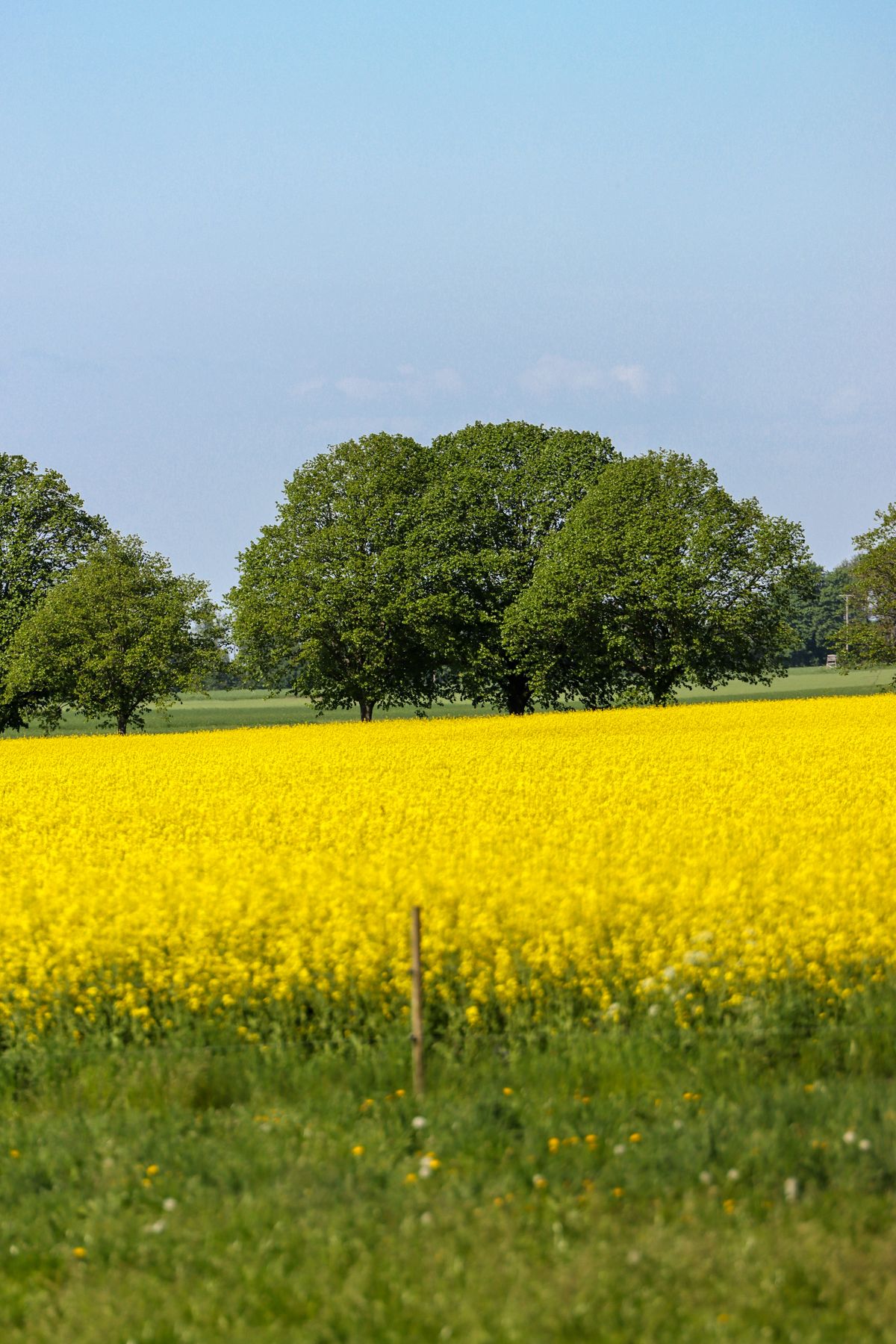
The specific advantages of May and June: Stockholm accommodates booking the week before rather than the month before. The archipelago ferries run at full schedule without the queues of high summer. Skåne in the south has the rapeseed fields in yellow bloom that photographers specifically travel for. The daylight by mid-June runs to nearly 11pm in Stockholm — you don't lose evening time the way you do in winter. And the temperature, 14–20°C across most of the country by late May, is genuinely pleasant for outdoor activity without requiring the heat management of July.
Timing within spring
Early May (1–15 May): the best value and least crowded, but Swedes call this period opålitlig (unreliable) — snow is still possible above 500m and a cold week can arrive without warning. Late May to mid-June: reliably warm enough for outdoor activity, daylight from 4:30am to 10pm in Stockholm, the best combination of conditions and accessibility. Avoid the week of Midsommar itself (third Saturday of June) unless specifically planning around the celebration — accommodation in Dalarna and the archipelago fills months ahead and prices spike.
Day 1 — Stockholm Arrival: The City in Spring
Gamla Stan, Kungsträdgården in bloom, Södermalm
Fly into Arlanda and take the Express (299 SEK, 20 minutes) to Stockholm Central. Spring Stockholm has a specific character — the city wakes up visibly in late April and May, the outdoor terrace culture returns, the water turns a particular shade of grey-blue that only happens before the summer green fully arrives.
Kungsträdgården, the park in the city centre between the royal palace and the waterfront, has cherry trees that bloom in late April and early May — briefly, intensely, and with enough awareness from Stockholm residents that the park fills with people treating the flowering as an annual event. If the timing aligns, this is worth an hour in the afternoon.
Walk Gamla Stan as usual, eat in Södermalm. In spring the restaurant terraces open but aren't yet the sardine experience of July evenings — this is the best time to sit outside in Stockholm.
Day 2 — Vasa Museum and Djurgården
Museums, the island park, spring light
The Vasa Museum (195 SEK) without a queue — this is primarily a summer phenomenon. In May you walk straight in. The same applies to Skansen (195 SEK), the Nordic Museum (150 SEK) and the ABBA Museum (250 SEK if relevant to your group), all within 15 minutes' walk of each other on Djurgården island.
Djurgården itself is worth the afternoon. The royal parkland running east from the museums along the water has a particular spring quality — the birch trees coming into leaf, the path along the canal quiet enough to hear the birds, Rosendals Trädgård garden café serving lunch from the kitchen garden. In July this path is busy; in May it is almost meditative.
The Moderna Museet on Skeppsholmen (free for under 19, 150 SEK adults) is an alternative for contemporary art — the collection is genuinely strong and the building sits on its own island between Gamla Stan and Djurgården with views in both directions.
Day 3 — The Archipelago in Spring
Early season islands — quieter, cheaper, just as good
The Waxholmsbolaget ferries run year-round to the major islands. In May the boats carry a fraction of July's passengers — you board without queuing, sit where you want, and the island you arrive on has that particular spring quietness of a place that is still waking up.
Vaxholm is the closest substantial archipelago town — 1 hour by ferry from Strömkajen, 75 SEK with the SL card. It has a proper history (the fortress guarding the main Stockholm waterway was built in 1548), a bakery that has been operating since 1900, and a harbour promenade that in May has perhaps 50 people on it instead of July's 500. The Vaxholm Fortress is accessible by boat in summer (it's on a separate islet); in May it may or may not be open — check the Vaxholms Kastell website before going.
For a more remote feel, Grinda is running in May and the island's trails and granite rocks are available — fewer swimmers means the best spots are available. Water temperature in late May: 12–14°C, cold but swimmable for the committed.
Day 4 — Train to Skåne: Sweden's South in Flower
High-speed train south, Malmö, Österlen coast
Book the X2000 from Stockholm Central to Malmö (4.5 hours, from 299 SEK advance). The train passes through the flat central Swedish landscape and across the Øresund Bridge — the moment you reach the bridge and see the water below is one of the better train experiences in northern Europe.
Malmö in the afternoon — the Turning Torso on the western harbour, the old town grid, a walk along the canal. Malmö in May feels different from summer Malmö: the university is still in session (Malmö University has 24,000 students), the outdoor café culture is newly returned after winter, and the Möllevångstorget food market runs at full volume with the spring produce beginning to arrive from Skåne farms.
Drive or take a bus east to Österlen for the night. The rapeseed fields around Kivik and Simrishamn bloom yellow in May — a specific, brief visual that people specifically travel for and that is entirely gone by June.
Day 5 — Österlen: Ales Stenar, Coast and Food
Iron Age megaliths, white sandy beaches, farm restaurants
Drive to Kåseberga on the southeastern coast. Ales Stenar — 59 standing stones in the outline of a ship, 67 metres long, on a headland above the sea — is Sweden's most significant prehistoric monument and one of the least visited significant prehistoric monuments in Europe. Free to visit, open always, reached by a 15-minute walk from the car park. In May there is no queue, no tour group, and a reasonable chance you will be there alone or near-alone at some point during your visit.
Drive north along the coast to Brantevik — a fishing village of perhaps 200 people with a harbour that dates to the Bronze Age and a restaurant (Brantevik Vinkrog) that has been operating in its current form for 40 years and is genuinely excellent. Booking recommended even in spring: 220–350 SEK for mains.
Continue to Simrishamn for the night — the main town on the Österlen coast, with a medieval church, a good food market and accommodation that costs 600–900 SEK per night in May (versus 900–1,400 SEK in July).
Day 6 — Värmland Forest Day
Train north into the forest — Karlstad, river, nature
For a route that doesn't loop back to Stockholm on Day 6, take the train from Malmö north and west to Karlstad in Värmland (3.5 hours, ~320 SEK via Gothenburg connection). Karlstad sits at the mouth of the Klarälven river where it flows into Lake Vänern — a mid-sized Swedish city with a good food market, the longest stretch of bicycle path in Sweden along the river delta, and the particular Värmland quality of being surrounded on all sides by forest that goes on until Norway.
The Klarälven river valley north of Karlstad is the access point for Värmland's best outdoor activity: raft building on the Klarälven, where you construct a timber raft and float downstream over several days. In May the outfitters run weekend versions (Friday to Sunday, approximately 2,000 SEK per person including equipment). Alternatively, the forest trails around the Fryksdalen valley are green in May and largely empty.
Night in Karlstad or a forest cabin in the valley north of the city.
Day 7 — Return to Stockholm, Departure
Train to Stockholm, afternoon or evening departure
Karlstad to Stockholm Central takes 2.5 hours by direct train (from 199 SEK advance). Arrive mid-morning for a final Stockholm afternoon before an evening flight, or take the midday train if the flight is late afternoon. The Östermalm food hall is open until 7pm and is worth a final stop for Swedish provisions to take home — the gravlax, the knäckebröd, the cloudberry jam.
Arlanda Express from Stockholm Central to Arlanda: 20 minutes, 299 SEK. Check in closes 45 minutes before departure on short-haul.
Spring vs Summer: The Honest Comparison
What you lose in spring: the warmest swimming, the midnight sun in the full sense, the full crayfish and prawn season, and Midsommar itself. What you gain: accommodation 20–30% cheaper, no advance booking required in most places, museums and ferries without queues, and a specific spring quality to the landscape — birch trees in new leaf, wildflowers in Skåne, the forest floor still carrying water from snowmelt — that is genuinely different from summer rather than a reduced version of it.
For anyone who has done Sweden in July and found it crowded, or for first-time visitors who want a more relaxed experience, late May and early June are the honest best months. The country is at its most welcoming and least pressured.
What Midsommar Week Actually Looks Like
If your trip falls in the third week of June, you will encounter Midsommar — the celebration of the summer solstice that is the most important Swedish cultural event of the year. Swedes travel home from cities to their family cottages; the archipelago and Dalarna are essentially booked solid; public transport is reduced on the Friday afternoon. For visitors, Midsommar is worth experiencing once — the dancing around the maypole, the herring, the aquavit, the particular atmosphere of a celebration that has continued unchanged for centuries. But it requires booking accommodation in January and accepting that the logistics are more complex than a normal week in Sweden.