The First Night
It's 1:17 in the morning. I'm sitting outside our rented cabin on the shores of a lake somewhere north of Kiruna. The sun is not setting. In fact, it's been like this for three weeks. I haven't needed a curtain since we arrived in July. And right now, looking at the golden light dancing on the water at 1am, I genuinely don't know whether to laugh or cry.
This is midnight sun. And nobody actually warned us what it would do to our minds.
Getting There
Getting There
We flew into Kiruna Airport – a small airport that feels more like a mountain lodge than an international hub. Kiruna is the northernmost city in Sweden, sitting above the Arctic Circle, and it's the gateway to Swedish Lapland's summer season.
From Kiruna, we rented a car (essential in Lapland – distances are vast and public transport sparse) and drove northwest into the mountains. The landscape was immediate and overwhelming: birch forests turning golden at the edges, reindeer wandering across the road without any particular urgency, and mountains rising in the distance that seemed to have been painted by someone who'd never been told what "too dramatic" meant.
The First Night Without Night
You know intellectually that the sun won't set during midnight sun season. You've read the articles. You've seen the photographs. You think you're prepared. You are not prepared.
The first night, I woke at 3am convinced it was morning and we'd overslept. The light coming through the thin curtains was warm and golden – the exact quality of light that, at home, means "you're late." I grabbed my phone, saw the time, lay back down and spent the next two hours staring at the ceiling, deeply confused.
🛏 Pro Tip: Bring a Sleep Mask
Most accommodation in Lapland has blackout curtains, but bring a sleep mask anyway. Your circadian rhythm will need all the help it can get in the first few days. After about four days, most people adapt surprisingly well.
By day three, something interesting happened. My relationship with time simply dissolved. I stopped checking the clock. I ate when I was hungry, slept when I was tired. There's a freedom to it that I hadn't expected – a kind of detachment from schedules that felt, genuinely, like a different state of consciousness.
What You Can Do at Midnight
Here's what nobody tells you about midnight sun: the activities don't stop. At 11pm, we went hiking. The light was soft, warm, and completely shadowless in that eerie northern way. We saw no one for three hours on the trail. The reindeer didn't seem to care about the time either.
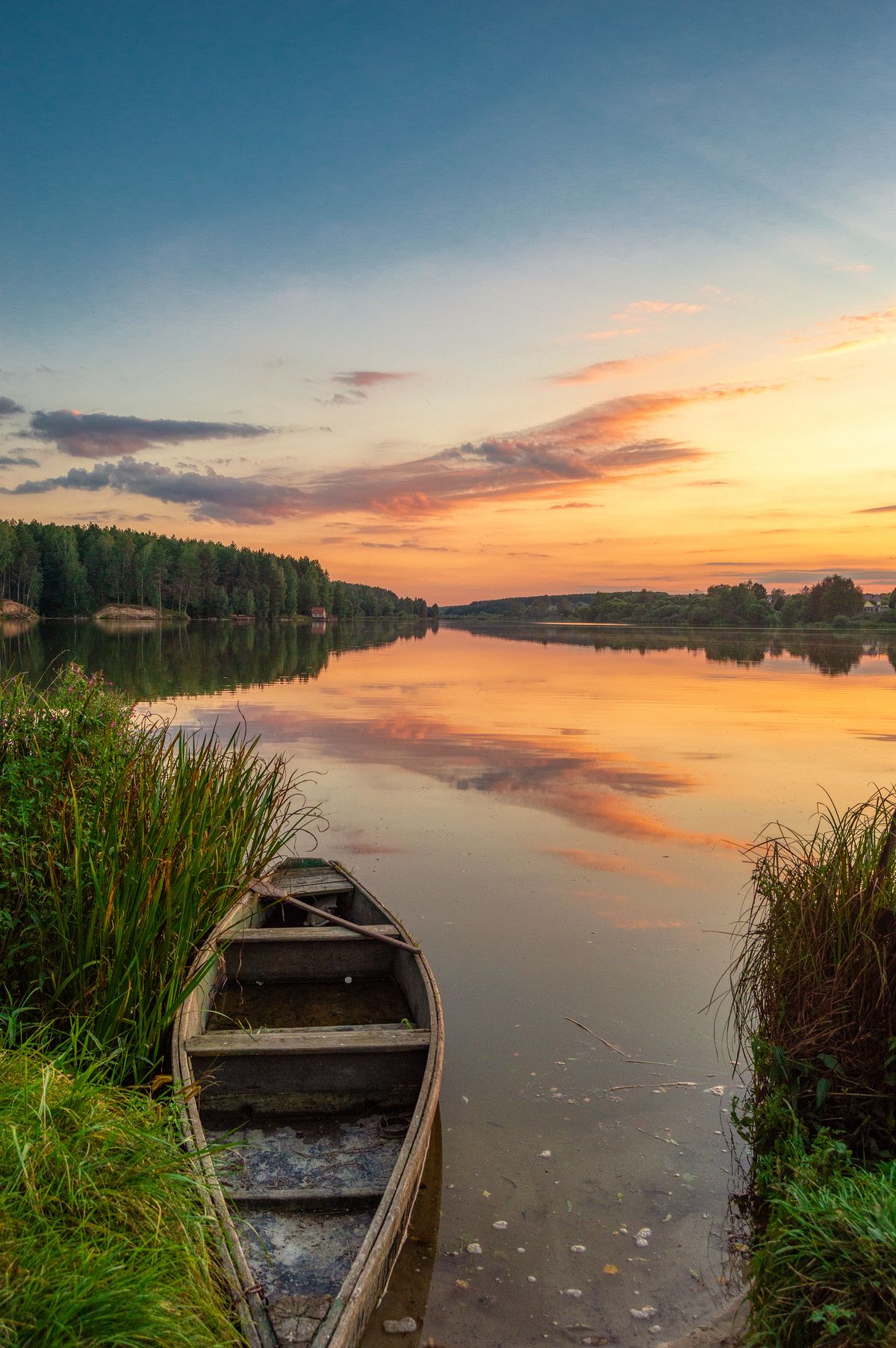
We also went kayaking at midnight on the lake near our cabin. The water was glass-smooth. The sky was a continuous gradient from gold near the horizon to a deep blue-violet overhead. It was, without qualification, one of the most beautiful experiences of my life.
The Emotional Side
I didn't expect midnight sun to be emotional. But something about living without darkness for weeks changes your relationship with rest, with transition, with the rhythm of a day. We evolved to need the pause that night provides. When that pause is removed, you feel it – not badly, but differently.
By the end of our two weeks, I found myself genuinely mourning the end of it. Not the sun itself, but the particular kind of freedom it created. The way it quietly erased the structure of a day and replaced it with just… time. Continuous, generous, unhurried time.
Planning Your Midnight Sun Trip
Midnight sun season in Swedish Lapland runs roughly from late May to late July, with the peak – when the sun truly doesn't set at all – from June 15 to July 15. Kiruna is well above the Arctic Circle, so it gets a longer season than destinations further south.
Late June is our recommendation: the weather is warmest, the midnight sun is at its full glory, and the wildflowers are in peak bloom across the mountains. Book accommodation early – it fills up fast, especially the more unique places.
📅 Best Time for Midnight Sun in Lapland
June 15 – July 15 for continuous sun. Late May and late July for partial midnight sun with more dramatic "white night" colors. Kiruna and Abisko are the most accessible locations above the Arctic Circle.
What It Costs
Swedish Lapland isn't cheap, but it's more affordable than you might expect if you plan ahead. We rented a small cabin for €90/night, cooked most of our own meals from local supermarkets, and spent maybe €40/day total on food. The reindeer walks past for free. The midnight light costs nothing.
The biggest expense is getting there. Flights into Kiruna from Stockholm or Helsinki are the most common routes. We booked six weeks ahead and paid around €180 return from Stockholm – perfectly reasonable for one of the most extraordinary experiences of our lives.

Our Verdict
Go. If you're reading a site called Coldcation, you already know that Sweden offers something that southern Europe simply can't: a sense of scale, silence, and natural drama that resets something in you. Midnight sun takes that reset and cranks it up to something profound.
We went for two weeks and came home rested – genuinely rested, in a way that a week in a sun-scorched Mediterranean resort has never achieved. Something about the air, the light, the vast emptiness of Lapland, recalibrates you.
Book the cabin. Bring the sleep mask. Go to bed late. Wake up confused. Don't fight it. Let midnight sun do its thing.
The Psychology of Perpetual Light
What nobody adequately prepares you for is the cognitive effect. After two or three nights of light that never fades, something shifts. You lose the reliable time cues your brain has used your entire life. Hunger comes at odd hours. Sleep feels negotiable. Energy levels plateau — not high, not low, just continuous. Swedes who grew up in Lapland describe the midnight sun period as one of almost manic productivity; the light feels like permission to keep going indefinitely.
Visitors who resist the adjustment — who try to keep southern European sleep schedules in the land of the midnight sun — tend to struggle. The more effective approach is to surrender to it. Sleep when you are tired, regardless of what the clock says. Eat when you are hungry. Go outside at 2am if you want to — the light is softer then than at noon, the air is cooler, and most of the other visitors are asleep. The midnight sun is best experienced when you stop fighting it.
Photography at Midnight
Photographers come to Lapland in midnight sun season specifically for the light between 11pm and 2am. At this point the sun is near the horizon — it dips close but does not set — and the light takes on the quality of a prolonged golden hour. Everything is lit from a low angle, casting long shadows, warming colours. The boreal forest, the rivers, the distant fells: all of it looks different at midnight than at noon.
The practical challenge is that the light changes slowly and you need patience to catch the best moments. Bring a tripod for landscape shots. The reflections of midnight sun on Lapland's river systems — particularly the Torne and the Kalix — are among the most reliably beautiful photographs you can take in Sweden.
🌞 Midnight Sun Calendar
True midnight sun (sun visible above the horizon at midnight) starts in Abisko around 26 May and lasts until 18 July. In Kiruna: approximately 1 June to 12 July. In Luleå (further south): the sun briefly touches the horizon around midnight in late June rather than dipping below it — still spectacular. Stockholm has 18+ hours of daylight in midsummer but no true midnight sun.
Where to Stay for Midnight Sun
Where you stay determines how much of the midnight sun experience you actually get. A hotel in central Kiruna is fine for logistics; a cabin on a lake is the thing itself.
🏨 Where to Stay
Abisko Tourist Station (STF) — The classic base. Cabins and hotel rooms above the treeline with direct access to Abisko National Park and Aurora Sky Station. Doubles from around 1,400 kr in summer. Book months ahead — it fills early.
Björkliden Fjällby — A small mountain village above the treeline, 10 minutes from Abisko. Self-catering chalets with unobstructed sky views. Excellent for families. From around 1,800 kr/night for a chalet sleeping four.
Cabin rental around Torneträsk — The lake south of Abisko has private cabin rentals that offer the best lakeside midnight sun views. Search on Airbnb or Blocket under "stuga Abisko." Rates vary; budget 800–1,500 kr per night for a basic cabin sleeping two.
Arctic Retreat (Jukkasjärvi) — Just outside Kiruna, this is a quieter option close to the ICEHOTEL summer operation and a beautiful river reach. From around 1,600 kr per night.
A 5-Day Midnight Sun Itinerary
📅 Days 1–2 — Arrival and Orientation
Fly into Kiruna Airport (40 minutes from Stockholm). Collect your rental car — essential in Lapland. Drive northwest to Abisko (about 100km, 1.5 hours). Check in. Walk the canyon trail (Kungsleden start) in the evening light. First midnight — go outside at 11:30pm and just sit with it for an hour. Don't photograph it yet. Just experience it.
📅 Day 3 — Torneträsk Lake
Kayak or canoe on Lake Torneträsk in the afternoon. The reflections of the mountain ridges at this hour in this light are something that photographs cannot convey. Midnight hike on the open fell above the treeline — no trees, no obstacles, the sun circling the horizon in full view. This is the experience that Lapland midnight sun veterans describe as the one that stays with them.
📅 Day 4 — Jukkasjärvi and Torne River
Drive down to Jukkasjärvi — a Sámi village on the Torne River, summer home of the ICEHOTEL (which operates as a boutique hotel in summer). The wooden church here is the oldest in Lapland. Fish or kayak the Torne River at midnight. The river is mirror-flat in the small hours and the reflections are extraordinary.
📅 Day 5 — Reindeer and Return
Most Sámi heritage experiences in the area run in the morning. Book a reindeer experience at a local camp (around 400–600 kr per person) — you'll learn about the herding cycle and the relationship between the reindeer and the land. Late afternoon flight back from Kiruna. You will sleep well on the plane. You have earned it.
Mistakes Visitors Make with Midnight Sun
❌ Fighting the light instead of surrendering to it
The visitors who struggle most with midnight sun are those trying to maintain their home sleep schedule. Blackout curtains and sleep masks help, but the more effective strategy is to let your schedule loosen. Sleep when tired, eat when hungry, go outside at 2am when the light is softest. The detachment from clock-time that results is not a problem — it's the actual experience. People who fight it for a week return exhausted. People who surrender to it return rested.
❌ Visiting Kiruna and staying in the city
Kiruna is a functional mining town — it's a base, not a destination. The midnight sun experience happens on the open fells, on the lakes, on the high ground above the treeline where the circling sun is visible all the way to the horizon. A hotel in Kiruna gets you the fact of the midnight sun through a window. A cabin by Torneträsk gets you the experience. The drive from Kiruna to Abisko takes 100 kilometres and 1.5 hours. Do it.
❌ Not having mosquito repellent
This is not a footnote. June and July in Swedish Lapland produce mosquito conditions that can make outdoor time genuinely unpleasant without protection. The midnight sun means the mosquitoes are active at 1am when you want to be outside watching the light. DEET at 30%+ on all exposed skin, long sleeves at dawn and dusk, and a head net for sitting still — these are the standard kit of anyone who has visited before. Buy repellent before you go; the selection in Kiruna supermarkets is limited in peak season.
Midnight Sun by Location: What to Expect
| Location | Midnight Sun Period | Max Daylight | Character |
|---|---|---|---|
| Abisko | 26 May – 18 July | 24 hours | Open fells, best views |
| Kiruna | 1 June – 12 July | 24 hours | Town + surrounding lakes |
| Gällivare | 2 June – 11 July | 24 hours | Forest + mountain access |
| Luleå | Sun grazes horizon ~21 June | ~22 hours | Near-midnight sun, archipelago |
| Stockholm | No true midnight sun | 18.5 hours | Very long bright evenings |
Frequently Asked Questions: Midnight Sun
Does the midnight sun affect your sleep?
Yes, significantly, for the first 2–4 nights. Your body loses its usual darkness cue for sleep. After about four days most people adapt and the disruption eases. Bring a high-quality sleep mask and book accommodation with proper blackout curtains — most Lapland places have them, but it's worth confirming.
Where is the best place to see midnight sun in Sweden?
Abisko is the classic answer — it has the most reliable clear skies in all of Scandinavia due to a localised microclimate created by Lake Torneträsk. For the most dramatic experience, the open fells above Abisko give a 360-degree horizon view of the circling sun. Kiruna itself is fine but more built-up; the lake and mountain settings nearby are far better.
When exactly is the midnight sun in Sweden?
Above the Arctic Circle (which passes just north of Gällivare), true midnight sun runs from late May to mid-July. In Abisko, the sun stays above the horizon from around 26 May to 18 July. Further south in Luleå, the sun just grazes the horizon around midsummer rather than staying fully above it. Stockholm never has true midnight sun but has around 18.5 hours of daylight on 21 June.
How much does a midnight sun trip to Lapland cost?
Budget around €150–200 per day all-in for a couple, including a cabin rental, food (mostly self-catered), car hire and fuel. Flights from Stockholm to Kiruna run €100–200 return if booked 4–8 weeks ahead. The experiences themselves — hiking, kayaking, watching the midnight sun — are mostly free. A guided Sámi experience runs 400–600 kr per person. A week in Swedish Lapland in June costs less than a week in southern Europe in July.
What should I pack for midnight sun in Lapland?
Layers, always. June in Lapland can be 22°C at noon and 4°C at 2am on the same day. Bring a down or synthetic insulated jacket, a waterproof shell, warm base layers and sturdy walking shoes. A sleep mask is essential. Mosquito repellent is non-negotiable from mid-June — the Lapland mosquito season is real and intense, particularly near wetlands and rivers. See our full Sweden packing list for detailed seasonal kit.
→ Also see our Swedish sauna culture guide — the heat-cold ritual that defines Swedish wellness.