There is a moment in a Swedish sauna, usually around the fifteen-minute mark, when something changes. The heat has moved past discomfort into something else. Your breathing slows. The tension that arrived with you — the accumulated weight of whatever you came from — begins to dissolve in a way that no amount of deliberate relaxation can replicate. You are not doing anything. You are simply being hot. And it is, improbably, one of the most effective things you can do.
Sweden's sauna culture is older than the country's current borders, deeper than most visitors expect, and almost entirely absent from how Sweden markets itself internationally. According to wellness researchers studying Nordic practices, "The sauna is one of the most researched wellness traditions in the world, with documented benefits to cardiovascular health, stress reduction and mental clarity — effects that have been validated across multiple peer-reviewed studies." The Coldcation argument for it is direct: if you are coming to Sweden to restore yourself — from heat, from exhaustion, from the wrong kind of stimulation — the sauna is the most concentrated version of what Sweden is offering. It works physiologically. It works psychologically. And it is available almost everywhere in the country, for very little money, in settings that range from a wooden hut on a lake to a glass pavilion floating over an archipelago harbour.
This guide covers the what, the where, the how, and the why that the research increasingly supports.
The Swedish Bastu: Some History
The Swedish word for sauna is bastu — a contraction of badstuga, meaning bathing cabin. The bathing cabin has been part of Nordic life for at least a thousand years, predating Christianity in Scandinavia and serving functions that were both hygienic and social. Before running water, the bastu was where you washed. Before hospitals, it was where women gave birth (the heat provided sterile conditions and warmth). Before the industrial revolution turned it into a leisure activity, it was simply a practical building that every farm had.
The 20th century saw the bastu migrate from farm necessity to summer cottage ritual. The classic Swedish summer house — the sommarstuga — almost always has a bastu by the water. The ritual is embedded in the annual calendar of Swedish life: you open the cottage, you light the bastu, you swim in the lake. The sequence is so established that it requires no explanation among Swedes. For visitors, it requires a lot.
How It Works: The Heat-Cold Cycle
The physiological mechanism of sauna is better understood than its reputation suggests. A traditional sauna operates at 80–100°C with low humidity. In the Swedish version, löyly — steam produced by ladling water over the stones of the stove — is used to raise the perceived heat without dramatically increasing the ambient temperature. The effect on the body is rapid: core temperature rises, blood vessels dilate, heart rate increases to 100–150 beats per minute, and sweating begins at a rate of around half a litre per session.
The cold plunge that follows — whether into a lake, a cold pool, or a roll in snow — causes an equally rapid reversal: vasoconstriction, reduced heart rate, a cascade of catecholamines including adrenaline and noradrenaline. The body's response to this thermal shock is the hormonal event that most regular sauna users are seeking. The calm that follows is not relaxation in the passive sense — it is the body returning to equilibrium after a genuine physiological challenge, and the feeling is distinct from anything a hot bath or a warm bed provides.
Heat
15–20 min at 80–90°C. Löyly (steam) raised once or twice. Sit on your towel, upper bench for more heat. Silence.
Cold
30–90 seconds in cold water — lake, sea, pool or snow. No delay — the contrast is the point. Breathe through it.
Rest
10–15 min outside. Wrap in a towel. Drink water. Let the body return to normal. This is when the calm arrives.
Repeat two to four times. The total session — including rest periods — runs 90 minutes to two hours. People who do this regularly describe the effect as better sleep, reduced muscle soreness, lower resting heart rate, and a quality of mental clarity in the hours after that is difficult to manufacture any other way.
The science is catching up with the practice. A landmark 2018 study from the University of Eastern Finland found that men who sauna bathed four to seven times per week had a 66% lower risk of dementia compared to those who went once a week. Cardiovascular benefits are similarly well-documented. The mechanisms — reduced inflammation, improved endothelial function, reduced blood pressure — are consistent with what the Nordics have been experiencing empirically for a millennium.
Swedish vs Finnish Sauna Culture
The distinction matters because visitors sometimes assume they are identical. Finland and Sweden share a common sauna heritage, but the cultures have diverged.
Finnish sauna culture is more ritualised, more codified, and more intensely felt. Finland has approximately 3 million saunas for 5.5 million people — roughly one sauna per household. Sauna is embedded in Finnish national identity in a way that borders on the sacred; important business meetings have historically been held in saunas, and the post-sauna state is described in Finnish as saunaraivo — sauna peace — a specific emotional quality with no direct English equivalent. The Finnish sauna temperature tends toward the extreme (90–100°C), and the löyly is used with more abandon.
Swedish sauna culture is quieter. It is less a ceremony and more a practice — embedded in summer cottage life, in the archipelago, in wilderness lodges, in hotel amenities, and increasingly in urban public bathhouses, but without the near-religious weight that Finland attaches. Swedes tend to run their saunas slightly cooler (80–90°C), use löyly more moderately, and treat the session as a personal restoration rather than a social ritual. You will rarely see a birch whisk (vihta) in a Swedish sauna — that is more specifically Finnish.
Both are excellent. The Swedish version may be more accessible for visitors unfamiliar with the extreme heat; the Finnish version is more intense and more transformative if you can tolerate it.
The Cold Plunge: Why It Matters
The cold component is where most newcomers hesitate, and it is precisely what makes the experience work. Without the cold, you have had a hot bath. With the cold, you have had a physiological event.
The key is not duration — 30 to 60 seconds is sufficient to trigger the response. The key is commitment: you must actually enter the cold water fully, not dip a foot and retreat. The first three seconds are the worst. Then the cold becomes manageable. Then, if you stay, it becomes interesting — the body's focus narrows to the immediate physical sensation in a way that silences everything else. When you step out and your skin reddens and the warmth floods back, what happens in the following ten minutes is remarkable: a calm that is not tiredness, a clarity that is not stimulation.
In Sweden in summer, the cold plunge is the lake. This is the essential version — stepping off a dock into dark, cold water with the evening sky above you and the sauna's heat still radiating from your skin. In winter, some devotees cut a hole in the ice and descend into water that is 0–4°C. This is not masochism. It is simply a more extreme version of the same mechanism, producing a correspondingly more intense response. Swedes who do the winter ice plunge describe it as the most effective anxiety treatment they have encountered.
🌊 First-Time Cold Plunge Advice
Don't think about it. The longer you stand at the water's edge, the worse the anticipation. Enter in one movement. Breathe — the instinct is to gasp; breathe steadily instead. Stay for at least 30 seconds. Exit slowly. Your skin will flush red; this is correct. Give yourself 10 minutes before returning to the sauna. Do not drink alcohol before or during — it impairs thermoregulation in ways that can be dangerous.
Etiquette: What to Know
Silence. The sauna is not a social space in the conventional sense. Quiet conversation is acceptable; loud conversation is not. The silence is not awkward — it is the point. You are giving your nervous system permission to stop processing social cues, which is part of what makes the post-sauna calm so distinctive.
Nudity. In private saunas and many public ones, nudity is standard. In mixed-gender public bathhouses, swimwear or a towel is common. Follow the visible convention of whoever is already there. Do not comment on others' nudity or lack of it.
Your towel. Always sit on your towel — both for hygiene and because the bench is hot enough to burn bare skin directly.
Löyly. In a shared sauna with a communal stove, ask before throwing water on the stones. Some people are more sensitive to steam than others. "Löyly?" is sufficient — Swedes will understand.
Phones. Leave them outside. This is not a rule in most places, but it is the appropriate behaviour. The sauna works precisely because it is a space without information. Using your phone defeats the purpose entirely.
Duration. 15–20 minutes per round is typical for experienced users. New arrivals often find 10 minutes sufficient initially. There is no prize for staying longer than is comfortable — the goal is the cycle, not endurance.

Where to Find the Best Saunas in Sweden
Stockholm: Hellasgården
The best urban sauna experience in Stockholm — a traditional wood-fired sauna in a nature reserve 20 minutes from the city centre, directly on Lake Källtorp. In winter, a hole is cut in the ice for the plunge. Open year-round, modest entry fee, no reservation required for the communal sauna. The combination of accessibility and genuine natural setting makes it the first recommendation for any Stockholm visitor.
Stockholm: Centralbadet
A historic bathhouse in the city centre — Art Nouveau building, indoor pool, sauna complex and the particular grandeur of a 19th-century establishment that has been running continuously since 1904. More formal and more expensive than Hellasgården, but a distinctive experience in itself.
Gothenburg: Eriksberg Havsbad
A floating sauna complex in Gothenburg's harbour — saunas built on pontoons over the water, with the cold plunge directly into the harbour. The industrial backdrop of the old shipyard across the water is part of the atmosphere. Open year-round; book in advance for evening sessions.
Stockholm Archipelago
The archipelago's defining sauna experience is the wood-fired bastu by the water on an uninhabited island. Several islands — Utö, Grinda, Sandhamn — have public or hotel saunas with direct lake or sea access. The summer version (sauna → Baltic Sea → sauna) is quintessential Swedish summer. Book a cottage rental with its own bastu for the complete experience.
Swedish Lapland: Every Wilderness Lodge
In Lapland, the sauna is not optional — it is how you warm up after a day of dog sledding or snowmobiling, how you process the cold, and how you justify the ice plunge that follows. Virtually every wilderness lodge, fishing cabin and rural hotel has a wood-fired bastu. The winter version — step from a 90°C sauna onto the snow at −20°C and then into the cut-ice hole — is the most extreme cold contrast available in Sweden, and for those who have done it, the most memorable.
Dalarna: Lake Cottage Saunas
The Dalarna lake cottage sauna — a small red wooden building at the water's edge, wood-fired, with a simple dock — is the most archetypally Swedish version of the experience. Rental cottages around Lake Siljan almost universally include a bastu. This is the sauna as domestic practice rather than tourist attraction: the family version, informal, relaxed, and genuinely Swedish.
The Sauna as a Coldcation Argument
The reason Swedish sauna culture belongs in a Coldcation guide is that it is one of the clearest expressions of what a Coldcation is actually trying to do. A Coldcation is not a cold holiday in the temperature sense — it is a deliberate reset. An escape from the overstimulation of heat, crowds, information and the performative exhaustion of modern travel. Sweden's sauna tradition has been engineering exactly this reset — physiologically, neurologically, socially — for longer than most of the concepts we currently use to describe wellness have existed.
The Visit Sweden campaign that launched in late 2025 — "Nature Prescriptions," based on a survey showing two-thirds of international respondents would travel to Sweden if a doctor recommended it for their health — was built almost entirely around sauna and cold plunge as the primary mechanism. This is not marketing invention. The science supports it. Two to four sauna sessions per week, over a period of months, produces measurable reductions in inflammation markers, cortisol levels, blood pressure and all-cause mortality risk.
You are coming to Sweden to escape something. The sauna helps you arrive somewhere else. That is the point.
🏡 Booking a Cottage with a Bastu
When booking Swedish summer cottages on Airbnb, Blocket.se or Stugtjänst, filter for "bastu" or "sauna." Almost all lakeside properties have one; confirm it is wood-fired (vedeldad) rather than electric if you want the traditional experience — the wood-fired version produces a softer, more intense steam. Ask whether it heats to at least 80°C; some older electric models plateau lower. The bastu should be about 15–20 minutes' walk from the lake, by the water's edge.
The Birch Whisk, the Bucket, the Ladle
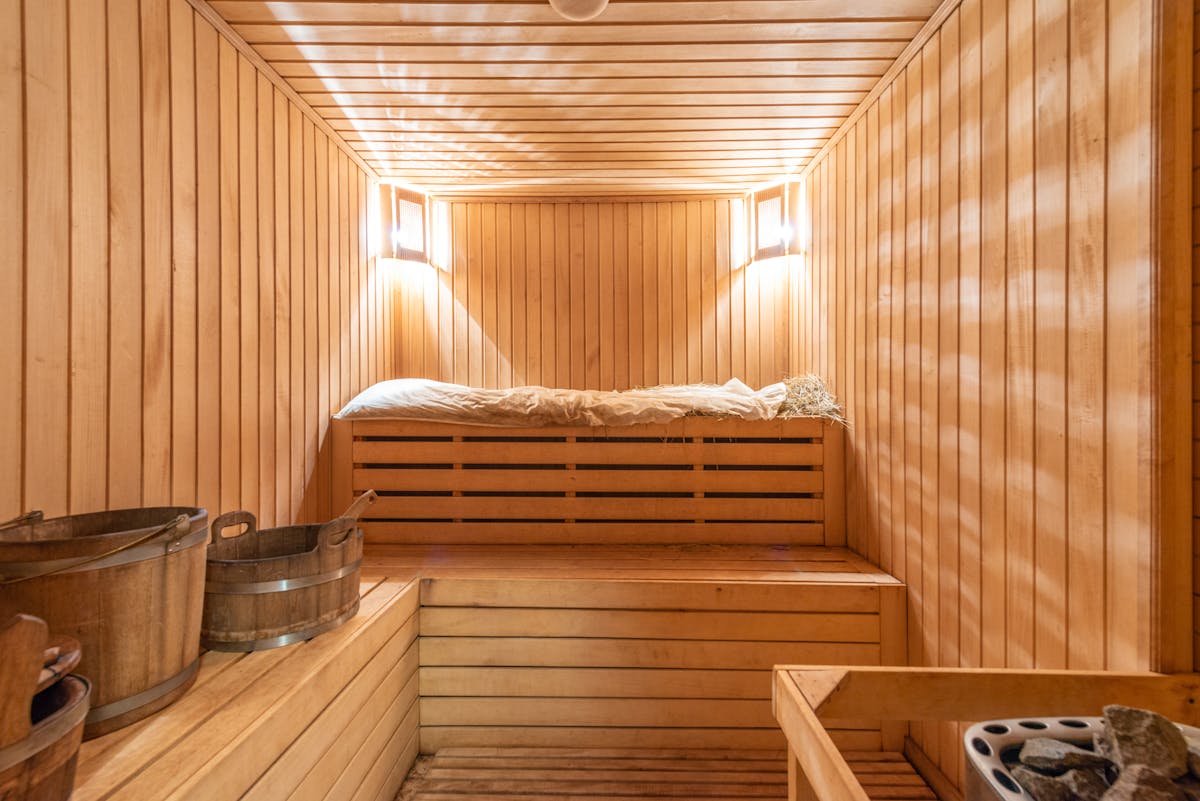
The physical equipment of a proper bastu is worth understanding. The kasa — the wooden ladle used to throw water on the stones — is the instrument of löyly. The water bucket sits beside the stove; some enthusiasts add a few drops of eucalyptus or pine tar oil to the water, producing an aromatic steam that adds a sensory dimension to the heat. The wooden bucket of cold water with a ladle serves as a cooling rinse without leaving the sauna.
The birch whisk (björkris) — bundles of young birch branches used to gently beat the skin — is less common in Swedish practice than Finnish, but not unknown in rural Dalarna and Norrland. The effect is circulatory: the gentle impact on the skin increases blood flow to the surface and, in late spring when young birch leaves are used fresh, produces a faint, clean birch fragrance that is one of the more distinctively Nordic sensory experiences available.
Sauna in Winter vs Summer
Both are excellent. They are different in character.
Summer sauna is the more sociable version. The evenings are long; after the session you sit outside on the dock with a towel and a cold drink and watch the light change over the lake. The water is cool rather than cold — Lake Siljan in July is around 20°C — which makes the contrast less violent and the overall experience more gentle. Children are present. Dogs wander. It is one of the most quintessentially Swedish summer experiences.
Winter sauna is the more intense version. The cold contrast — from 90°C to −20°C in the snow, then into ice water — is physiologically extreme and produces the most dramatic effect. The darkness, the silence, the steam rising from your skin into cold air, the particular quality of the Lapland night sky overhead: it is a completely different experience from the summer version. More challenging, more memorable, more transforming.
If you have the choice, do both. They show different aspects of the same tradition.